Clean Label Bread Improvers by Market | CrumbForge
A practical guide for bread factories comparing clean label improver expectations across Europe, North America, Latin America, the Middle East, and Asia-Pacific.
Request pricing A practical guide for bread factories comparing clean label improver expectations across Europe, North America, Latin America, the Middle East, and Asia-Pacific.
Request pricingClean label is not one fixed specification. For bread factories, it is a market-by-market commercial target shaped by retailer standards, consumer expectations, ingredient declarations, and production realities.
A clean label bread improver that works well for one customer brief may miss the mark in another region. Some buyers focus on short ingredient lists. Others want recognisable ingredients, avoidance of synthetic-sounding additives, or bakery claims such as “no added emulsifiers” or “made with enzymes.”
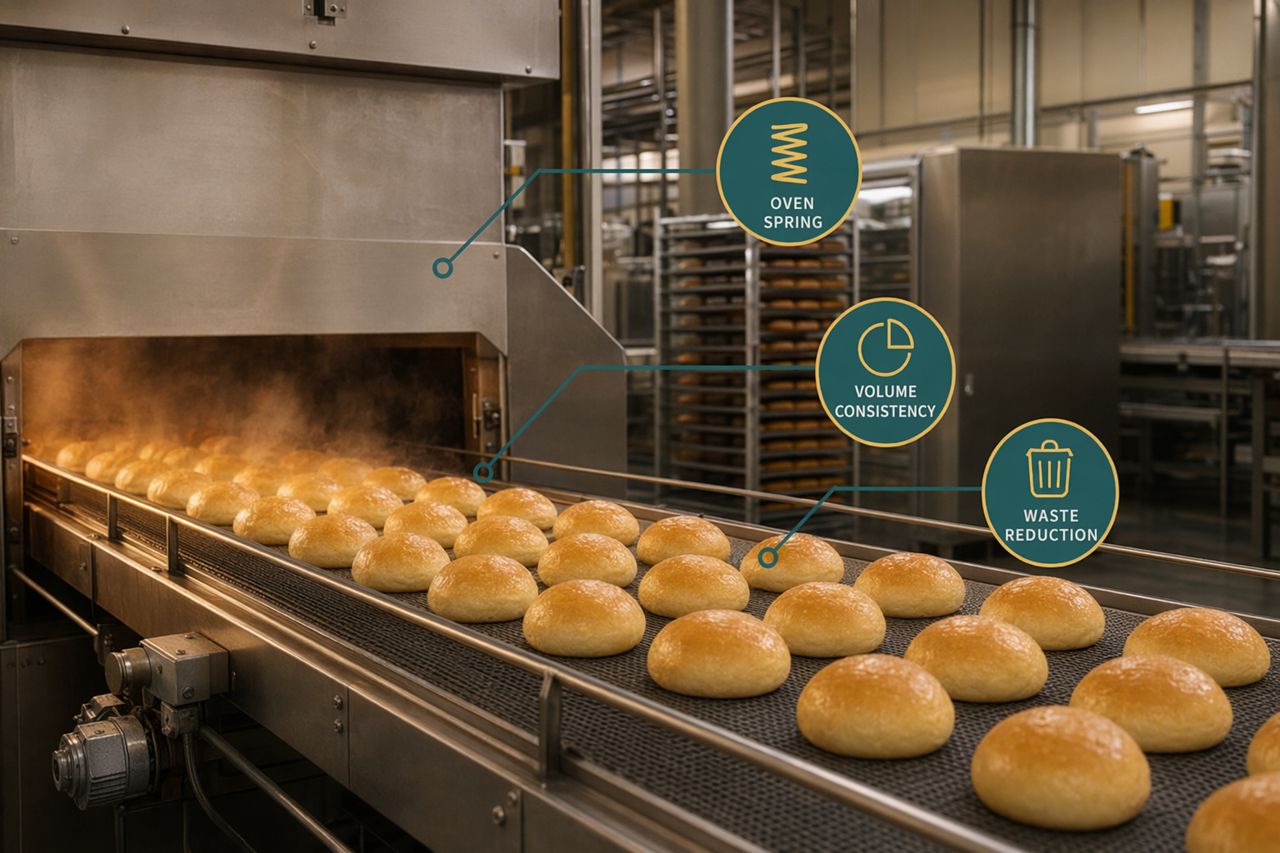
CrumbForge is a bakery enzyme supplier for bread factories that need dependable performance across shifts, flours, and high-speed lines. Our role is practical: help technical and procurement teams match cleaner label objectives with dough tolerance, fermentation stability, oven spring, crumb softness, slicing performance, and waste reduction.
In industrial bread, clean label often means replacing or reducing ingredients that customers consider less desirable while maintaining line performance and finished bread quality.
Common clean label targets include:
The challenge is that commercial bakeries cannot trade label appeal for unstable production. Clean label only works when the dough still runs, proofs, bakes, cools, slices, bags, and distributes reliably.
Clean label expectations are influenced by four main pressures.
Large retailers often define what is acceptable before regulation does. Their lists may restrict certain emulsifiers, preservatives, flour treatment agents, or ingredient names. These standards can vary widely even within the same country.
An ingredient that feels acceptable in one market may raise questions in another. For example, “enzymes” may be well understood in some bakery sectors, while another market may prefer declarations that focus on traditional bakery ingredients, depending on local rules and product positioning.
A pan bread buyer may prioritise softness retention and uniform slices. A bun manufacturer may focus on volume, symmetry, and resilience after freezing or reheating. A regional flatbread or toast bread plant may define clean label around flexibility, foldability, or freshness over shelf life.
Clean label formulas must survive real flour variation, seasonal wheat changes, high-speed mixing, interrupted fermentation windows, and plant-to-plant differences. The cleanest label is not useful if it creates dough inconsistency or packing waste.
European clean label briefs often place strong emphasis on ingredient declaration style. Many bakery customers want fewer additive references and more familiar ingredient language.
Typical production objectives include:
For European bread factories, enzyme-based systems are commonly evaluated as part of a cleaner label improver strategy. The technical question is not simply whether an enzyme can replace an emulsifier. It is whether the overall improver system can maintain machinability, fermentation stability, crumb texture, and shelf-life expectations under normal plant conditions.
In North America, clean label briefs are often tied to brand claims, retailer programs, and consumer-facing language such as “simple ingredients,” “no artificial preservatives,” or “no added emulsifiers,” depending on the product and channel.
Bread factories usually need clear operational proof before changing improvers:
This is where bakery enzymes are evaluated as process tools, not just label tools. A successful clean label improver should support the line operator as much as the marketing claim.
In many Latin American bread markets, softness is a central buying cue. Clean label interest is growing, but value, freshness perception, and distribution resilience remain critical.
Clean label reformulation must therefore protect:
For plants serving wide retail networks, a clean label improver cannot be fragile. It must help the bread withstand flour variation, ambient temperature shifts, and handling stress while still supporting a more acceptable declaration.
Across parts of the Middle East and Africa, bread factories often manage challenging flour consistency, warm plant environments, and demanding freshness expectations.
Clean label priorities may include:
In these conditions, enzyme systems need to be robust. The strongest clean label solution is usually built through plant trials, flour review, and process adjustment rather than a simple ingredient swap.
Asia-Pacific clean label requirements vary significantly by country and bread type. Soft sandwich breads, sweet buns, milk breads, steamed products, frozen dough items, and premium bakery formats can each require a different approach.
Common technical goals include:
In many APAC markets, clean label must be balanced with highly specific texture expectations. The improver system needs to support the eating quality that consumers already associate with the product.
Before approving a cleaner label bread improver, technical teams should define the success criteria in plant language.
Bakery enzymes can support clean label bread improver design by improving specific production and quality outcomes.
Depending on the bread type and process, enzyme systems may help with:
The goal is not to add complexity. The goal is to build a cleaner, more dependable improver system that helps the plant run consistently.
[Faceless explainer video embed: “Clean Label Bread Improvers Across Markets”]
This short explainer walks through why clean label requirements differ by region and how bread factories can evaluate enzyme-supported improvers against real production outcomes: dough tolerance, fermentation stability, oven spring, softness retention, slicing performance, and waste reduction.
Clean label bread improvers should be selected by market brief and proven on the line. A good specification connects three things:
When those three are aligned, clean label becomes more than a marketing request. It becomes a controlled production change with measurable value.
If you are developing a cleaner label bread, bun, roll, or sandwich loaf, CrumbForge can help you review the brief and identify an enzyme-based improver approach for your process.
Use the on-site request a quote form to share your product type, current production challenge, target label direction, and plant conditions. Our team will respond with practical next steps for evaluation.
Tell us your application and volume — we reply with pricing and lead time.