Why Bread Factories Lose Loaf Volume After a Flour Change
A flour change can look harmless on paper and still take volume out of the loaf by the second or third shift.
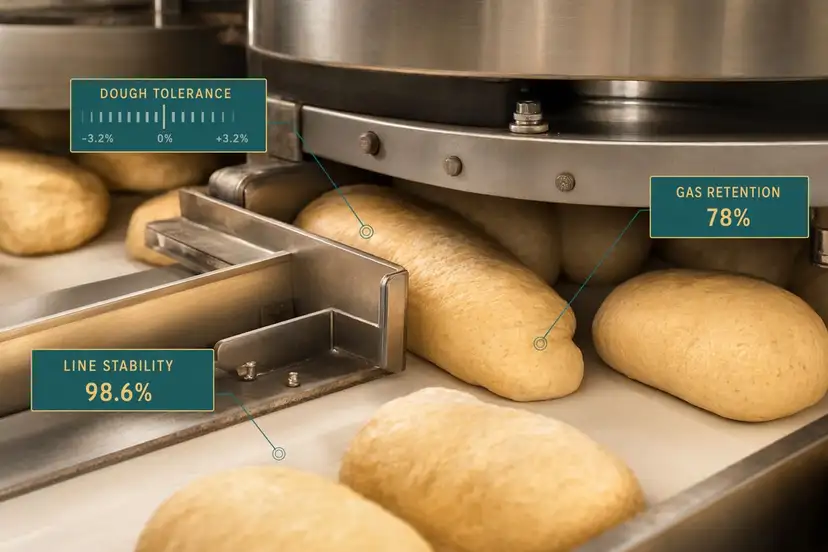
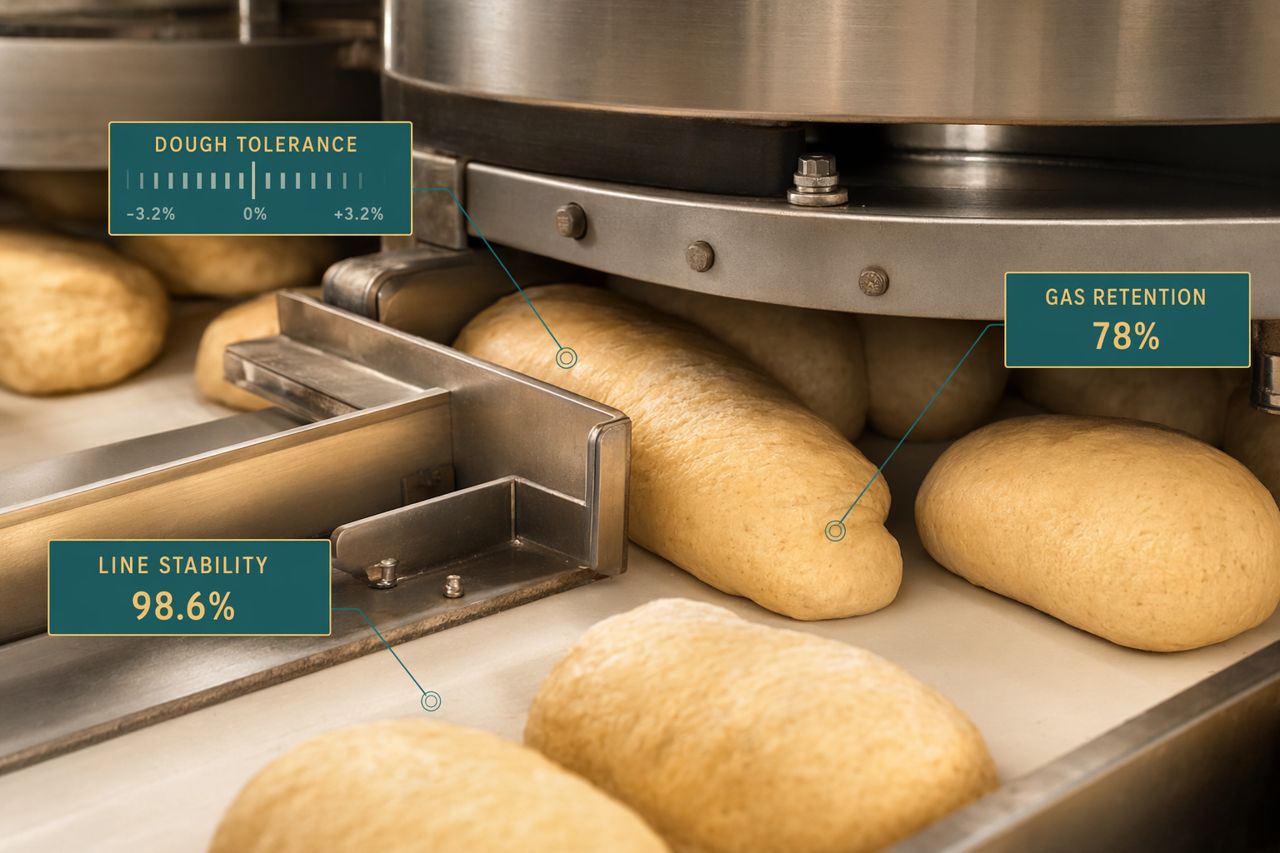
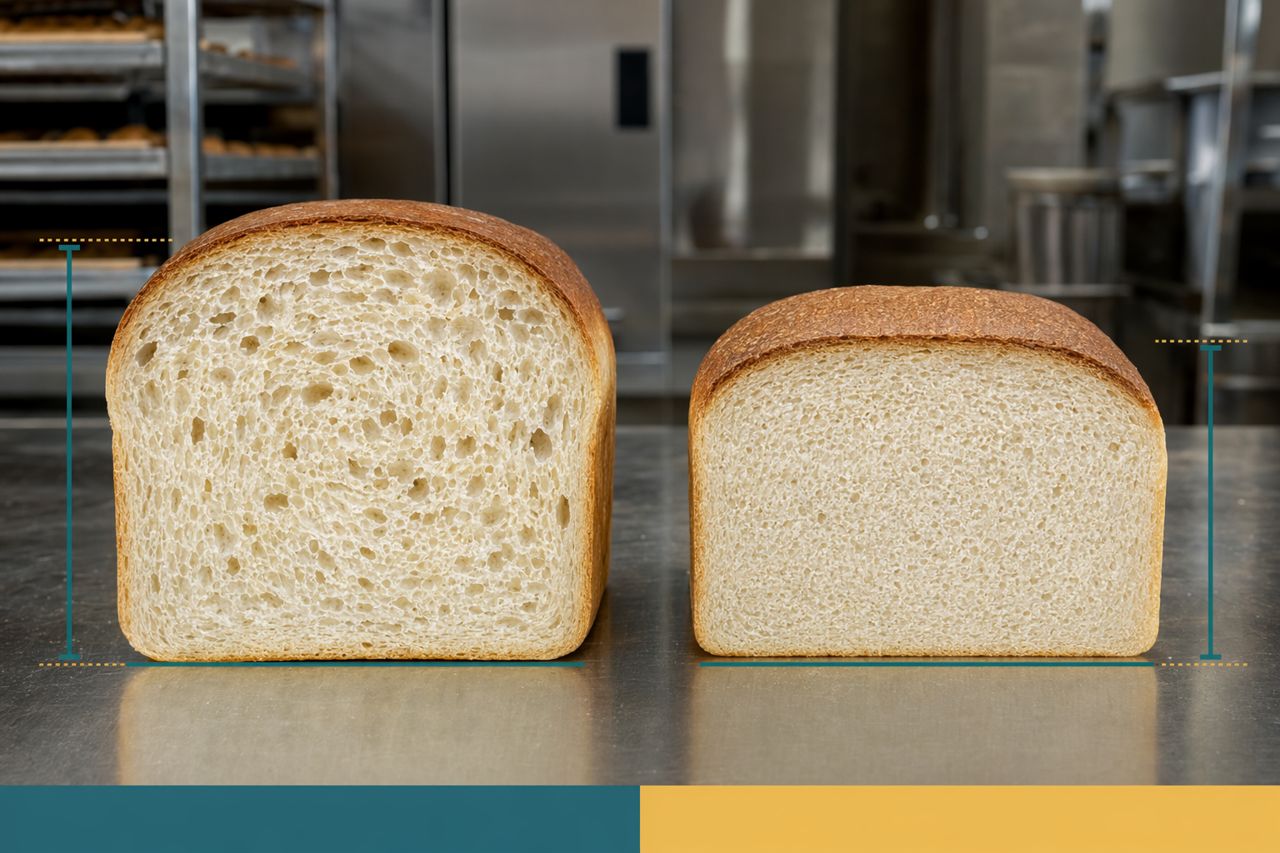
The specification may be within range. Protein may be close. Absorption may only move a little. But on a high-speed bread line, small changes in flour behavior can show up quickly as tighter dough, weaker gas retention, reduced oven spring, dense crumb, poor slicing performance, and more waste at depanning, cooling, or bagging.
CrumbForge is a bakery enzyme supplier for bread factories that need dependable performance across shifts, flours, and high-speed lines. When loaf volume drops after a flour change, the answer is rarely one single adjustment. It is usually the interaction between flour quality, dough development, fermentation stability, and the enzyme system already built into the formula.
Watch the 1-minute explainer: how a flour change can reduce gas retention, oven spring, and crumb softness on a bread line.
What usually changes when the flour changes
A bread factory does not buy flour as a single number. It buys a processing behavior.
When a new flour lot, mill stream, supplier, crop origin, or blend enters the plant, several functional properties can shift at once:
- Water absorption and dough feel
- Gluten strength and extensibility
- Starch damage and fermentable sugar availability
- Native enzyme balance
- Bran contamination or ash-related effects
- Dough mixing tolerance
- Proof stability and gas retention
- Crumb structure after baking and cooling
Even if the flour certificate looks acceptable, the dough may respond differently under real production pressure: spiral or horizontal mixing, divider stress, intermediate proof, moulding pressure, pan loading, final proof humidity, and oven profile.
Why loaf volume drops
1. The dough becomes stronger but less extensible
A stronger flour can sound like an upgrade, but volume depends on balance. If the dough resists expansion during proof and early oven lift, gas cells cannot open cleanly. The result can be a shorter loaf with a tight crumb and a rounded, constrained top.
On the line, operators may report:
- Dough that feels tight at the moulder
- More stress marks or tearing
- Reduced pan fill height before the oven
- Dense shoulder crumb after slicing
2. The dough becomes weaker and loses gas
If the new flour lacks enough functional strength, the dough may expand too easily and then lose structure. Gas retention drops during final proof, transfer, or early baking. The loaf may look acceptable at proof but collapse slightly before structure sets in the oven.
Common symptoms include:
- Flat or wide loaf shape
- Open, uneven cells below the top crust
- Weak sidewalls
- More variation across pans or lanes
3. Fermentation speed changes
A flour change can alter sugar release, yeast response, and dough maturity. If fermentation moves faster or slower than the existing line timing, the dough reaches the oven in the wrong condition.
Under-fermented dough often gives poor expansion and tight crumb. Over-fermented dough may lose gas-holding capacity and bake with weak structure. Both can reduce finished loaf height.
4. Starch damage shifts absorption and softness
Starch damage influences how flour takes up water and how the crumb sets. A change here can affect dough stickiness, mixing behavior, crumb softness, and slicing performance after cooling.
If absorption is not corrected carefully, the bakery may chase the issue with water changes that solve one handling problem while creating another downstream.
5. The existing enzyme system no longer matches the flour
Bakery enzyme systems are often tuned to a flour profile and production method. When flour behavior shifts, the same enzyme system may no longer support the right balance of dough tolerance, fermentation stability, oven spring, and anti-staling performance.
This does not always mean the enzyme system is wrong. It may mean the formula needs a controlled adjustment to suit the new flour and the line reality.
What to check first on the production floor
Before changing several formula variables at once, isolate the loss of volume with a structured plant check.
Compare the old and new flour under the same conditions
Run side-by-side doughs where possible. Keep yeast, water temperature, mixing time, dough temperature, proof time, and oven settings as consistent as practical.
Track:
- Dough temperature after mixing
- Mixing time to target development
- Dough feel at divider and moulder
- Proof height and stability
- Oven spring
- Finished loaf height
- Crumb grain and softness after cooling
- Slicing clean-up and blade drag
- Waste or downgrade rate
Watch the dough at stress points
Loaf volume is often lost before the oven, not inside it. Check the points where the dough is stretched, compressed, or transferred:
- Divider and rounder
- Intermediate proof exit
- Moulder pressure
- Panning
- Final proof transfer
- Oven entry
If dough tears, smears, tightens, spreads, or gases out at these points, the volume loss has a mechanical and biochemical cause.
Do not correct volume with water alone
Water adjustment is important, but it is not a complete fix. Increasing water may improve softness and machinability, but it can also increase stickiness, reduce tolerance, and weaken slicing if the structure is not supported. Reducing water may improve handling but make crumb firm and reduce expansion.
A stable correction usually considers water, mixing, proof, and enzyme functionality together.
Where enzyme systems help
For bread factories, enzyme solutions are not just about one label claim. They are process tools. The right system can help the dough tolerate flour variation while protecting finished bread quality.
Depending on the flour and process, CrumbForge enzyme systems can be designed to support:
- Dough handling stability through dividing and moulding
- Improved gas retention during proof
- Better oven spring and loaf volume consistency
- Softer crumb over shelf life
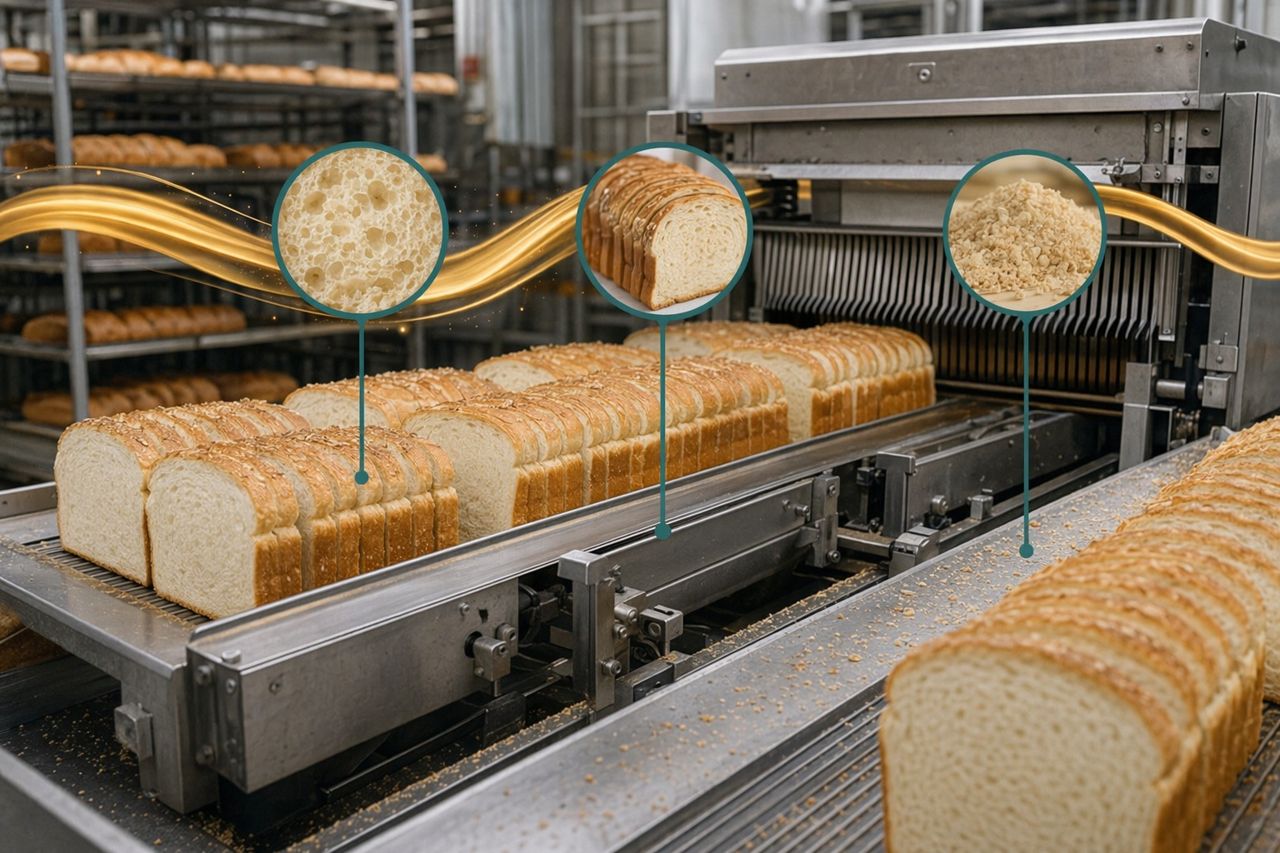
- Cleaner slicing performance after cooling
- Reduced rework, downgrades, and line waste
The goal is not to force every flour to behave identically. The goal is to keep the bread line within a dependable operating window.
A practical troubleshooting sequence
When loaf volume drops after a flour change, use this sequence before making a broad formula reset.
Step 1: Confirm the symptom
Measure finished loaf height and weight across lanes and shifts. Compare against the previous flour period, not just the product standard. Note whether the volume loss is constant or shift-dependent.
Step 2: Identify the process stage where structure is lost
If proof height is already low, focus on mixing, fermentation, and dough development. If proof height is good but oven lift is poor, focus on gas retention, dough extensibility, and oven entry condition. If baked height is acceptable but slicing waste increases, focus on crumb set, softness, and cooling behavior.
Step 3: Review mixing and dough temperature
New flour may need a different mixing endpoint. Avoid assuming the same time gives the same development. Dough temperature changes can also shift fermentation timing and final proof condition.
Step 4: Adjust absorption carefully
Make small, documented water changes and watch the whole line, not just the mixer. The best absorption is the one that supports machinability, proof stability, oven spring, crumb softness, and slicing performance together.
Step 5: Rebalance the enzyme system if needed
If process adjustments do not recover volume and consistency, review the enzyme system against the new flour behavior. A tailored enzyme approach can help restore the balance between strength, extensibility, gas retention, crumb softness, and anti-staling.
Signs the enzyme system should be reviewed
A flour change may require enzyme support when the bakery sees:
- Lower loaf volume with the same mixing and proof settings
- Tight crumb despite acceptable fermentation
- Weak sidewalls or collapse after proof
- More variation between shifts or flour deliveries
- Higher slicing waste or crumb tearing
- Faster firming during shelf life
- More operator intervention to keep the line running
These are not just quality issues. They are production cost issues. Every out-of-window dough creates more checks, more adjustments, more rejected bread, and less confidence in the line.
How CrumbForge supports bread factories
CrumbForge works with commercial bakery teams that need practical enzyme systems matched to plant reality. We focus on what technical managers need to protect: dough tolerance, fermentation stability, oven spring, crumb softness, slicing performance, and waste reduction.
For a flour-change issue, we can help review the production symptoms, identify the likely process bottlenecks, and recommend an enzyme solution that fits your bread type, flour profile, equipment, and operating window.
If your new flour is costing loaf volume, the next step is not guesswork. It is a controlled review of the dough system.
Need help stabilizing loaf volume after a flour change? Request a quote through our on-site form and tell us your bread type, current challenge, and production setup.