High-Speed Bun Lines: Dough Tolerance Problems That Show Up Only at Scale
A bun dough can look stable in the lab, behave well during a short plant trial, and still create trouble once it runs at commercial speed for a full shift.
That is the reality for high-speed bun production. Tolerance problems often stay hidden until the process window gets tight: flour variation, longer bowl waits, warmer dough, divider stress, proofing drift, and conveyor handling all stack together. By the time the buns reach the oven, the line may already be carrying the defect.
CrumbForge is a bakery enzyme supplier for bread factories that need dependable performance across shifts, flours, and high-speed lines. For bun producers, that means building formulas that support dough handling stability, fermentation control, oven spring, crumb softness, slicing performance, and waste reduction without asking operators to fight the same problem every hour.
Why scale exposes dough tolerance gaps
At low speed, dough has more time to recover. Operators can adjust by feel. A small stickiness issue may be dusted away. A slight fermentation delay may be absorbed before makeup.
On a high-speed bun line, small issues become mechanical issues:
- dough pieces sit longer before dividing or proofing
- warm dough becomes softer during transfer
- divider and rounder stress weakens gas retention
- sticky surfaces increase flour dusting and sanitation load
- proofing variation shows up as height and shape spread
- weak structure reduces oven spring
- crumb firms faster after cooling and packing
The line does not just reveal the formula. It amplifies every weak point in the formula.
The common symptoms technical managers see
Sticky dough after the first production window
The first bowls may run clean, then handling gradually worsens. Dough begins to smear on belts, rounder cups, or divider surfaces. Operators add dusting flour, but the extra flour can create dry spots, rough crust, uneven color, and downstream cleanup.
A tolerance-focused enzyme system can help support dough strength and handling consistency so the line is less sensitive to normal time and temperature drift.
Good proof volume, poor oven lift
Some bun doughs proof well but collapse or flatten as they enter the oven. This often points to a process window that is too narrow: gas is present, but the structure is not holding it through the final mechanical and thermal stages.
Formula support should focus on gas retention, dough elasticity, and oven spring, not just early proof activity.
Shape variation across lanes
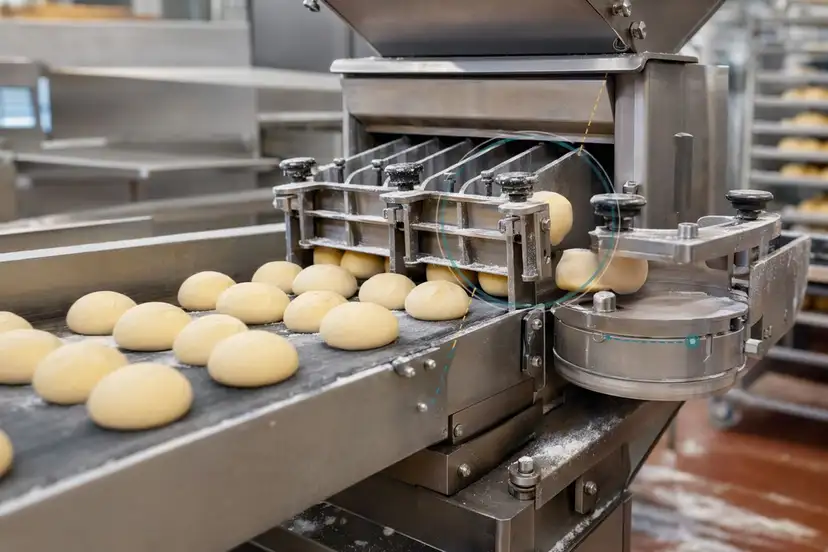
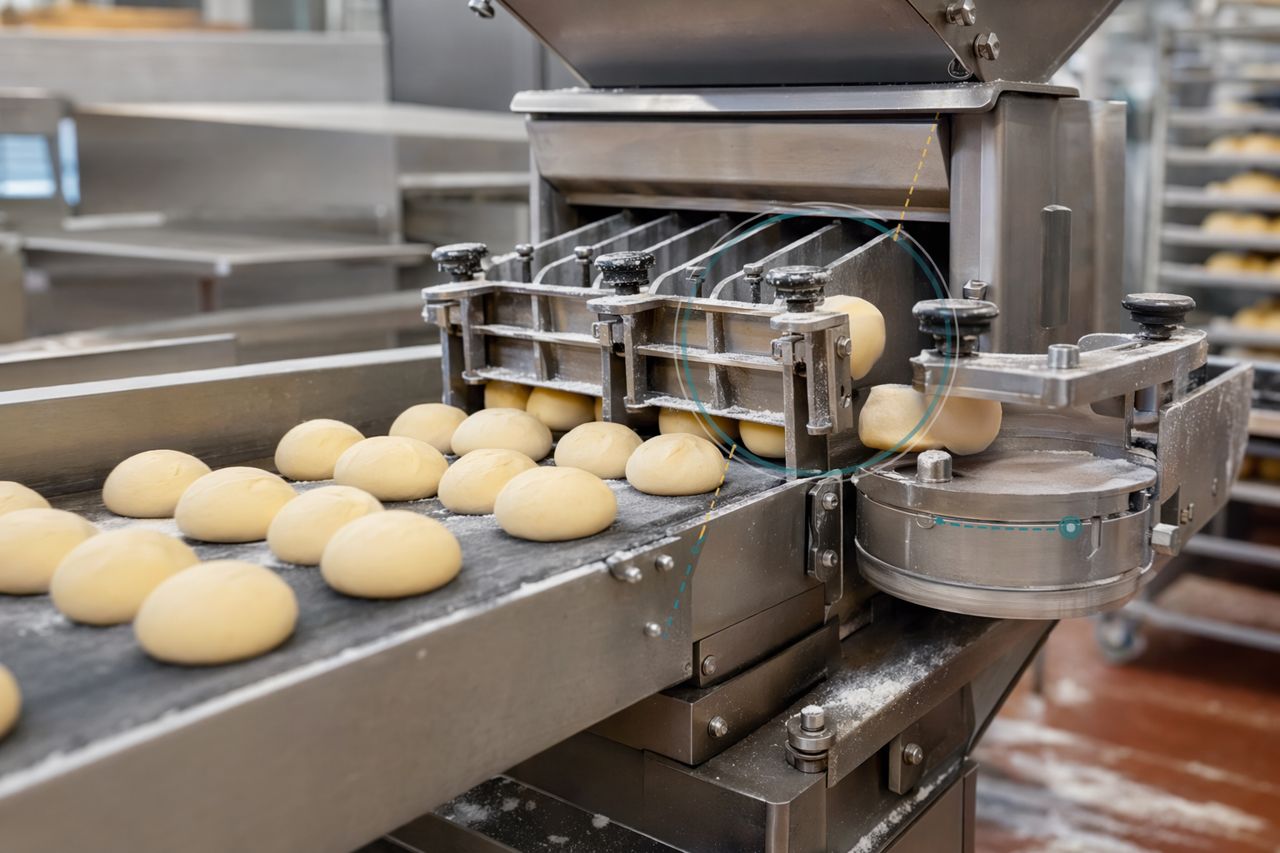
At high speed, lane-to-lane variation is expensive. If buns spread, tilt, or come out oval, the issue may not be one piece of equipment. It can be a dough tolerance problem made visible by fast dividing, rounding, panning, and proofing.
A more stable dough system helps reduce the number of operator interventions needed to keep product within specification.
Crumb softness drops before the end of shelf life
A bun can pass height and weight checks but still underperform after packing. If crumb firmness increases too quickly, customer complaints, returns, or internal downgrade decisions can follow.
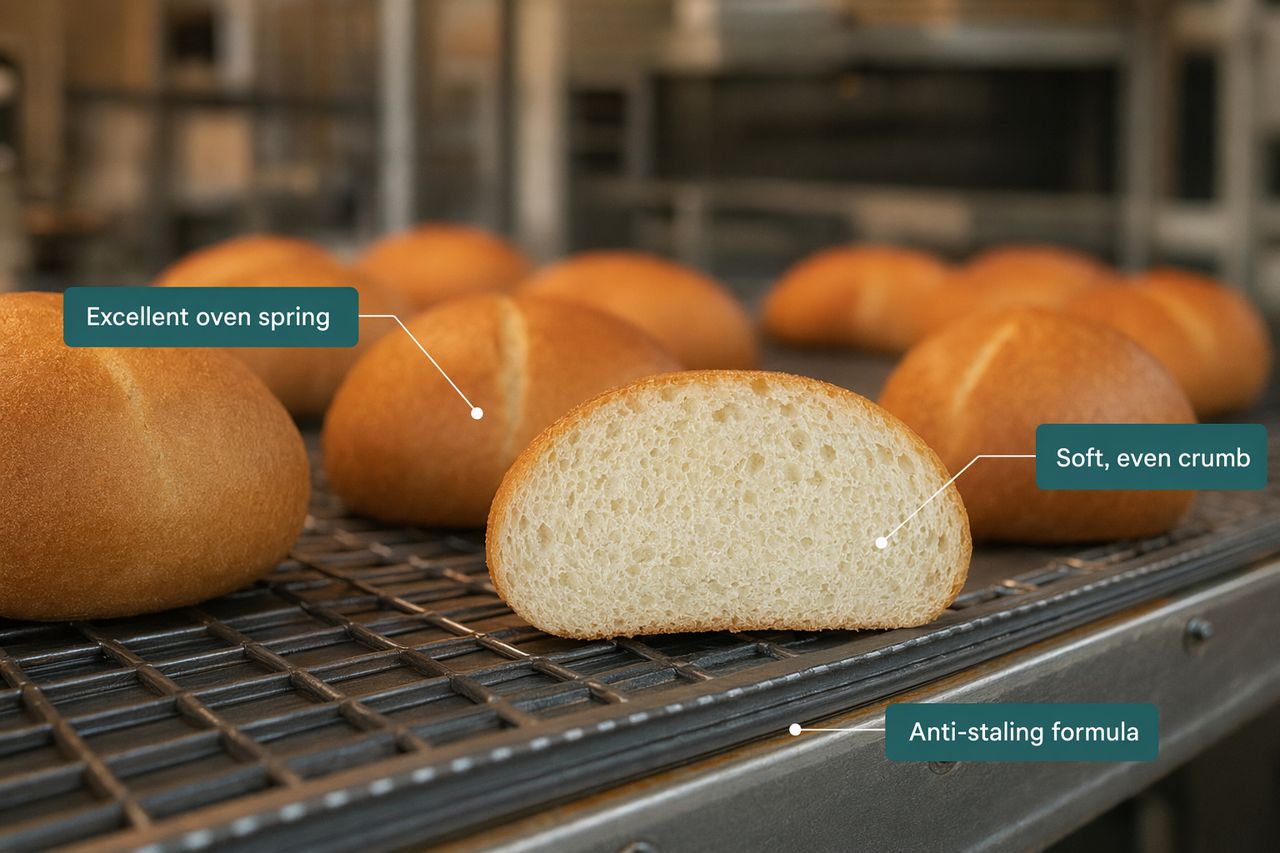
Anti-staling enzyme systems are used to support softness retention and eating quality over the intended distribution window, especially where buns face cooling, slicing, bagging, transport, and store holding.
Slicing drag and crumb tearing
Slicing performance is often treated as a blade or cooling issue, but crumb structure matters. Weak, gummy, or uneven crumb can drag, tear, compress, or shed. That creates waste, rework, and inconsistent packed appearance.
A formula that balances softness with structure can improve slicing cleanliness without making the bun fragile.
Where enzyme systems can help
Enzyme selection for high-speed bun lines should be process-led. The question is not which ingredient sounds powerful. The question is which production outcome needs more control.
CrumbForge supports bun manufacturers in four practical areas:
1. Dough handling stability
For lines dealing with stickiness, smearing, or variable machinability, the goal is a dough that stays workable from mixing through makeup. The right enzyme approach can support a stronger, more tolerant dough network, especially when flour quality changes across deliveries.
2. Fermentation stability
High-speed lines need predictable gas production and retention. A stable fermentation window helps operators maintain proof height, shape, and timing without chasing the line through repeated adjustments.
3. Volume and oven spring
Buns need lift, but they also need controlled shape. Enzyme systems can help support dough expansion and gas retention so buns move through proofing and baking with better height consistency.
4. Crumb softness and anti-staling
Softness retention is a commercial outcome, not just a texture preference. Better softness over the product life can reduce complaints, improve customer acceptance, and protect the value of packed inventory.
A practical diagnostic checklist
Before changing the formula, map the problem across the real production window. Useful checks include:
- Does stickiness appear from the first bowl or only after hold time builds?
- Are defects linked to flour lot, ambient temperature, or dough temperature?
- Do shape problems happen before proof, after proof, or after baking?
- Is the issue consistent across all lanes or concentrated in certain positions?
- Does crumb firmness increase faster after specific production runs?
- Are slicing rejects linked to cooling time, crumb structure, or bun height spread?
- How much dusting flour, rework, downtime, or downgrade waste is being accepted as normal?
This line-floor evidence helps separate equipment settings from formula tolerance.
What to ask a bakery enzyme supplier
A supplier should be able to talk in your production language, not just ingredient language. For high-speed bun lines, ask:
- Which formula outcome is the enzyme system designed to support?
- How does it behave under flour variation and normal shift-to-shift changes?
- Can it support dough tolerance without over-tightening the dough?
- What should be monitored during a plant trial?
- How should the trial compare control and enzyme-assisted dough under real line speed?
- What changes should operators expect in handling, proof, bake, cooling, and slicing?
The strongest trials are not built around a perfect-condition batch. They are built around the conditions your bakery actually runs.
Build more tolerance into the bun formula
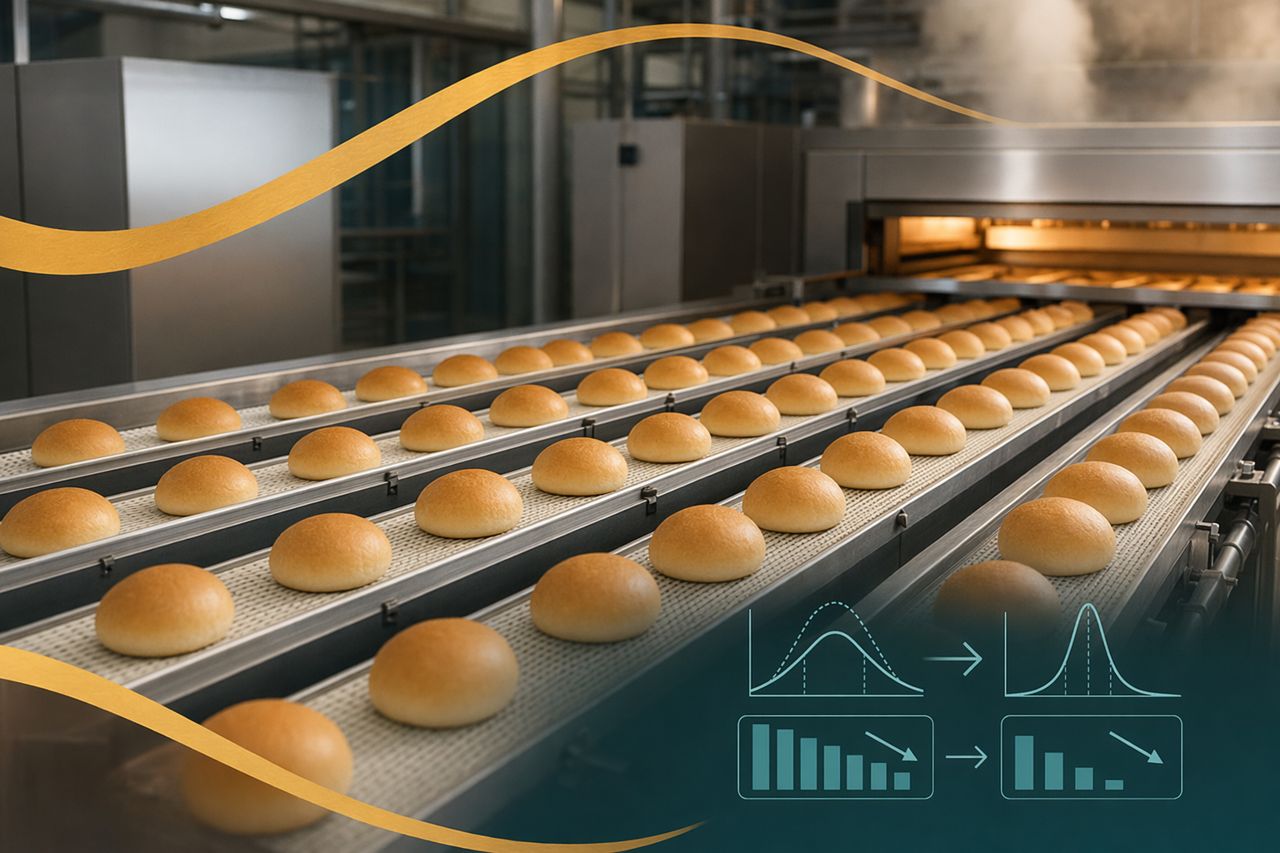
When a bun line only performs under ideal conditions, the cost shows up in downtime, rework, sanitation load, inconsistent packs, and shorter softness performance. A well-matched enzyme system can help widen the process window and make high-speed production easier to control.
If your team is working on dough tolerance, oven spring, crumb softness, anti-staling, slicing performance, or waste reduction, CrumbForge can help define a practical enzyme approach for your line.
Request a quote through the on-site form and share your bun format, flour situation, line speed challenges, and target quality outcomes.