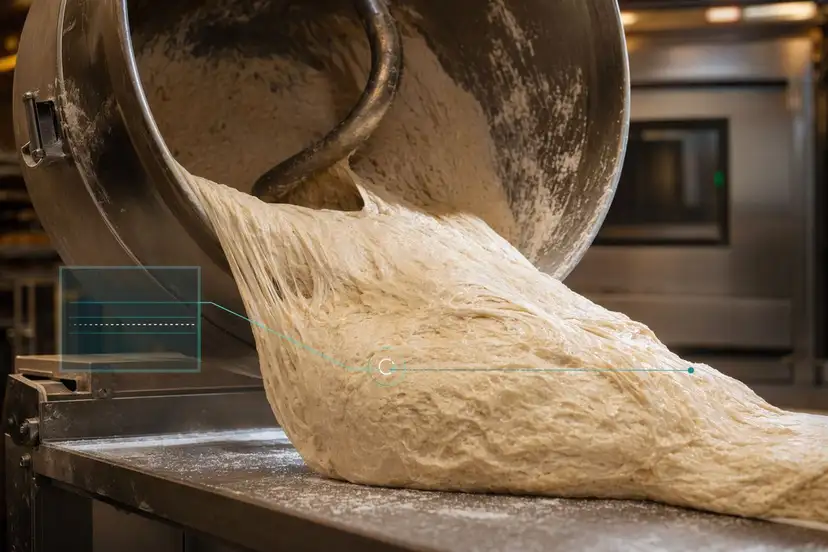
Why Bread Formulas Vary by Mixer Type | CrumbForge
How spiral, horizontal, and continuous mixers change dough development, fermentation stability, oven spring, crumb softness, and slicing performance in bread factories.
Request pricing How spiral, horizontal, and continuous mixers change dough development, fermentation stability, oven spring, crumb softness, and slicing performance in bread factories.
Request pricingA bread formula is not a fixed outcome. It is a starting point that becomes real only after flour, water, yeast, improvers, mixing energy, dough temperature, fermentation time, and line speed interact on the floor.
That is why the same formula can run cleanly on one mixer and become tight, sticky, weak, or slow on another. For bakery technical managers, the issue is rarely the recipe alone. It is the way each mixer develops gluten, distributes water, incorporates air, and sets the dough condition before make-up.
CrumbForge is a bakery enzyme supplier for bread factories that need dependable performance across shifts, flours, and high-speed lines. When mixer type changes dough behavior, enzyme selection and dosage strategy should be reviewed against production reality, not just the lab sheet.
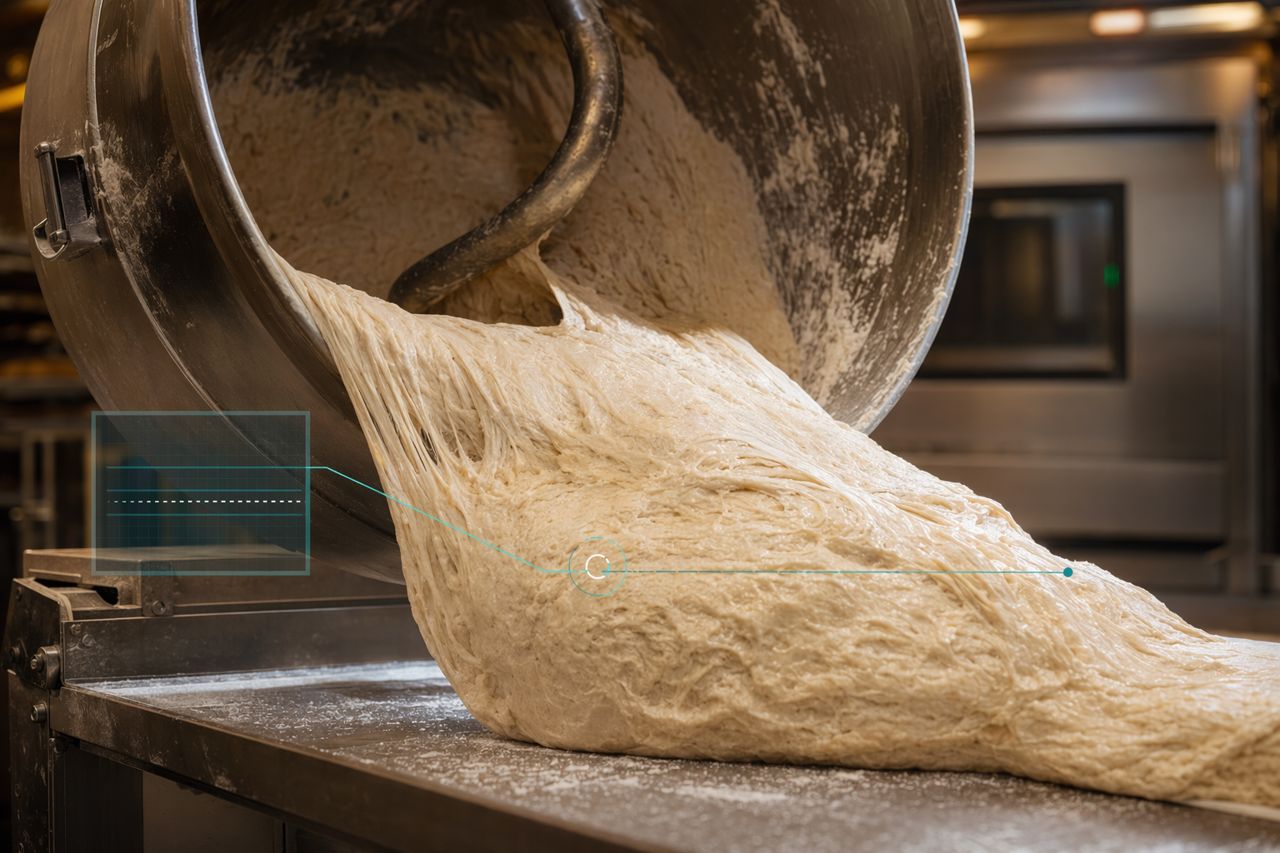
Mixing is not only about blending. It determines how quickly the dough reaches development, how much tolerance it carries into the divider, and how well it holds gas during proofing and baking.
Key mixer-related variables include:
When these variables shift, the same formula may show different dough handling, fermentation stability, oven spring, crumb texture, slicing performance, and shelf-life behavior.
Spiral mixers are widely used for pan bread, buns, rolls, and artisan-style products because they can develop dough efficiently while keeping a relatively controlled dough temperature. They often produce good gluten strength and gas retention when the flour and hydration are well matched.
The risk is that a formula tuned for spiral mixing may have a narrow optimum point. A short mix can leave weak development and poor volume. A long mix can reduce tolerance, especially when flour quality varies or the line runs hot.
For spiral systems, CrumbForge typically looks at controlled dough resilience, extensibility, fermentation stability, and softness retention. The goal is not to make the dough artificially loose. It is to protect handling and finished bread quality across the normal operating window.
Horizontal mixers are common in high-volume bread factories because they handle large batches and integrate well with continuous downstream systems. They can deliver efficient mixing, but they may apply energy differently from spiral systems.
A formula transferred from spiral to horizontal mixing may show altered dough strength, water uptake, or oxidation behavior. Depending on mixer design and process settings, the dough may appear developed but lack the same recovery, gas retention, or machining consistency.
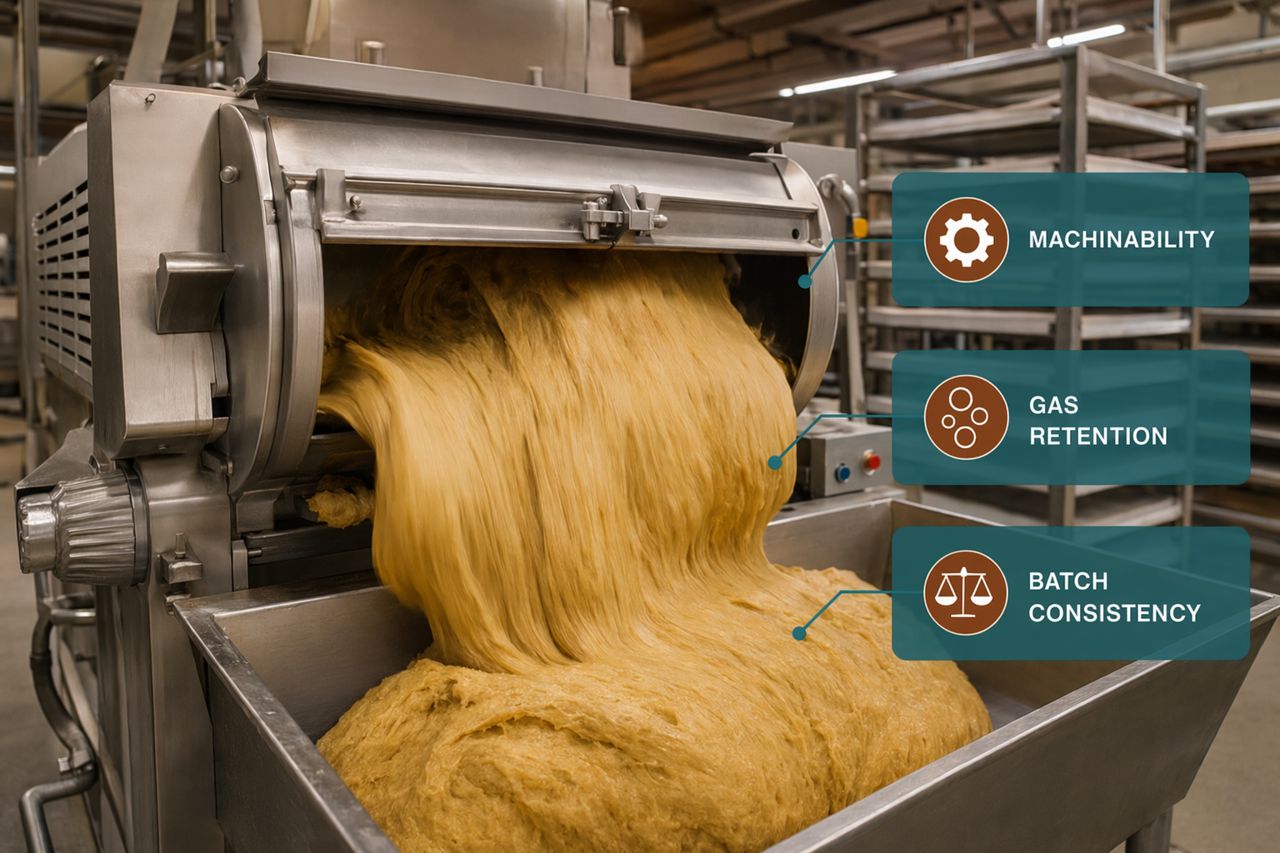
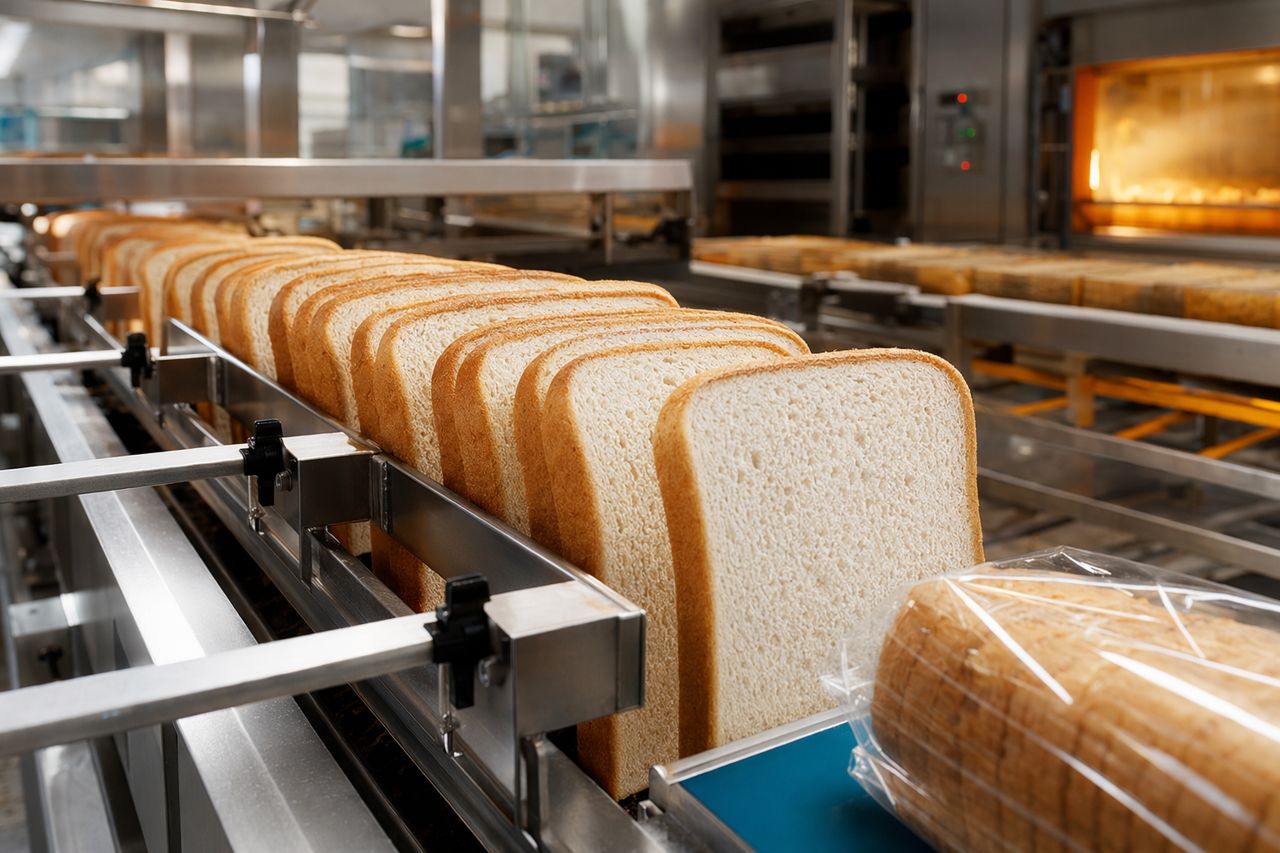
For horizontal systems, enzyme support often centers on dough machinability, gas retention, and crumb softness without compromising strength. The practical target is a dough that clears equipment consistently, holds shape through make-up, and bakes into a loaf that slices cleanly after cooling.
Continuous mixing can give excellent throughput, but it also reduces the buffer that batch systems sometimes provide. Small changes in hydration, flour quality, ingredient dispersion, or dough temperature can appear quickly as line instability.
In continuous systems, the same formula may behave differently because the dough has less rest time and less opportunity to equalize before dividing, moulding, or depositing.
For continuous mixing, the enzyme system must support predictable dough under speed. CrumbForge focuses on stability, softness retention, and clean handling so the formula can run through long production windows with fewer avoidable adjustments.
A common mistake is to move a bread formula from one mixer type to another without rebalancing the dough system. The ingredient declaration may stay the same, but the process has changed.
A direct transfer can affect:
When the process changes, enzyme performance also changes because enzymes work within the dough environment created by the mixer. Water availability, temperature, substrate exposure, and dough structure all influence the visible production result.
Bread factories rarely work with one perfectly consistent flour. Seasonal wheat variation, supplier changes, ash level, damaged starch, protein quality, and absorption can all alter dough behavior.
A mixer with a forgiving process window may absorb these changes quietly. A faster or more aggressive system may expose them quickly.
This is where a practical enzyme strategy can protect the line. The aim is not to mask poor process control. It is to build more tolerance into the formula so normal flour movement does not create unnecessary downtime, rework, or customer complaints.
Before adjusting any bakery enzyme blend, CrumbForge recommends a line-floor review of the mixer and downstream process.
Small temperature differences can change fermentation speed, dough feel, proof response, and final crumb. Compare target and actual discharge temperature across shifts.
A fixed time may not deliver the same development when flour, batch size, water temperature, or mixer load changes.
If dough feels dry in one mixer and sticky in another, the issue may be hydration speed, energy input, or flour response rather than water level alone.
Divider pressure, rounder performance, moulder stability, pan flow, proof height, oven spring, cooling loss, and slicing quality all help identify where the formula is losing control.
A useful trial should compare current formula performance against a defined enzyme adjustment under normal line conditions. The trial should look at handling, proofing, bake profile, crumb, softness over shelf life, slicing, and waste.
| Mixer type | Common production challenge | Practical enzyme objective |
|---|---|---|
| Spiral mixer | Narrow development window or dough tightening | Support extensibility, resilience, and consistent oven spring |
| Horizontal mixer | High-capacity handling variation | Improve machinability, gas retention, and crumb uniformity |
| Continuous mixer | Speed-sensitive dough changes | Build predictable tolerance, stable volume, and softness retention |
The right approach depends on the product, flour stream, process conditions, and quality targets. A pan bread line, bun line, roll line, and soft sandwich bread line may need different enzyme priorities even when the mixer category is the same.
Mixer-related formula variation is not just a technical inconvenience. It can show up as measurable production loss:
A dependable enzyme system helps reduce these avoidable variations when it is selected around the actual mixer, flour, and process window.
CrumbForge works with bread factories that need practical enzyme support for commercial production, not generic brochure recommendations. We review the formula, mixer type, flour behavior, process targets, and line symptoms before recommending a direction.
Our focus is clear:
If the same bread formula behaves differently across spiral, horizontal, or continuous mixers, the formula may need a process-led enzyme adjustment.
Request a quote from CrumbForge and tell us your product type, mixer system, flour variation issue, and current line symptoms. We will help you identify a practical enzyme direction for your bread factory.
Tell us your application and volume — we reply with pricing and lead time.