Reducing Bread Waste in Retail Distribution: Softness, Sliceability, Returns, and Forecasting
Bread waste rarely starts at the retail shelf. It often begins earlier: in dough handling variation, fermentation drift, inconsistent oven spring, crumb weakness, slicing damage, packaging delays, and product that firms too quickly before the sales window is finished.
For commercial bakeries supplying retail and foodservice distribution, waste reduction is not one single project. It is a chain of small controls that protect saleable quality across shifts, depots, and shelf life.
CrumbForge is a bakery enzyme supplier for bread factories that need dependable performance across shifts, flours, and high-speed lines. Our work is focused on practical production outcomes: dough tolerance, fermentation stability, oven spring, crumb softness, slicing performance, and fewer avoidable returns.
Where bread waste builds up before the customer sees it
Retail returns are visible. The causes are usually upstream.
Common waste drivers include:
- Short softness window: bread firms before the intended retail life is complete.
- Poor sliceability: weak or gummy crumb causes tearing, ragged slices, blade drag, and rejected packs.
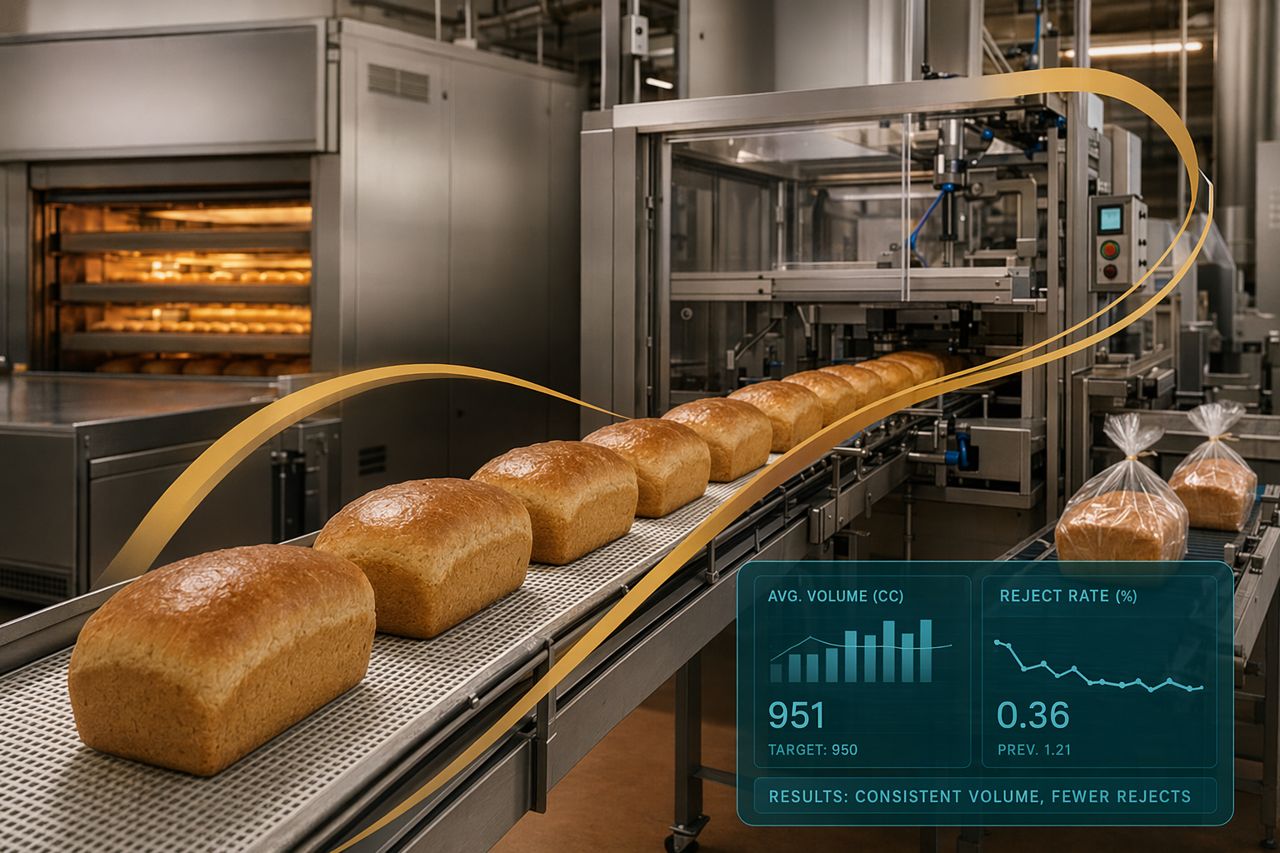
- Volume variation: inconsistent oven spring creates under-height loaves, unstable pack counts, and mixed shelf presentation.
- Fermentation sensitivity: dough behaves differently across flour changes, line stoppages, ambient shifts, or weekend production.
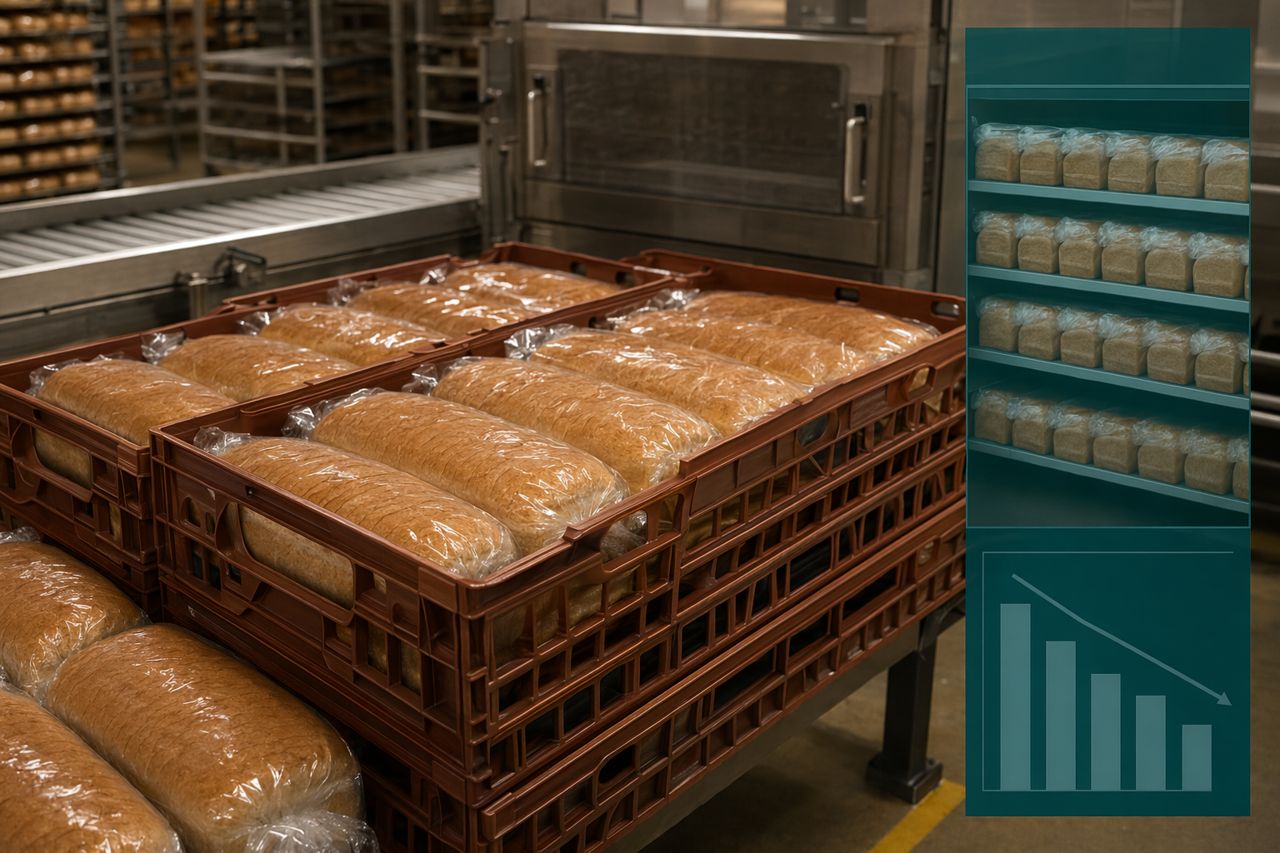
- Packaging vulnerability: warm, fragile, or uneven crumb can deform in bagging, stacking, or distribution.
- Forecasting pressure: short usable life forces tighter replenishment windows and more conservative ordering.
When these problems stack up, the bakery pays more than ingredient loss. It absorbs rework, labor, transport, customer claims, depot handling, markdowns, and lost confidence from retail buyers.
Why softness retention matters to retail distribution
Softness is a commercial shelf-life signal. If the consumer squeezes the loaf and it feels dry or firm, the product is already losing the sale, even if it is technically within date.
A targeted enzyme approach can support softness retention by helping the crumb stay more resilient over time. For bread factories, the value is not an abstract laboratory result. The value is a loaf that remains saleable for longer under real distribution conditions.
Better softness retention can help bakeries:
- Protect the last days of the retail sales window.
- Reduce premature markdowns and returns.
- Support longer delivery routes or less frequent replenishment.
- Improve consumer repeat purchase through consistent eating quality.
- Give planning teams more room to manage demand swings.
The goal is not to overextend product life beyond brand promise. The goal is to keep the loaf closer to its intended quality for the shelf life already being sold.
Sliceability is a waste-control point
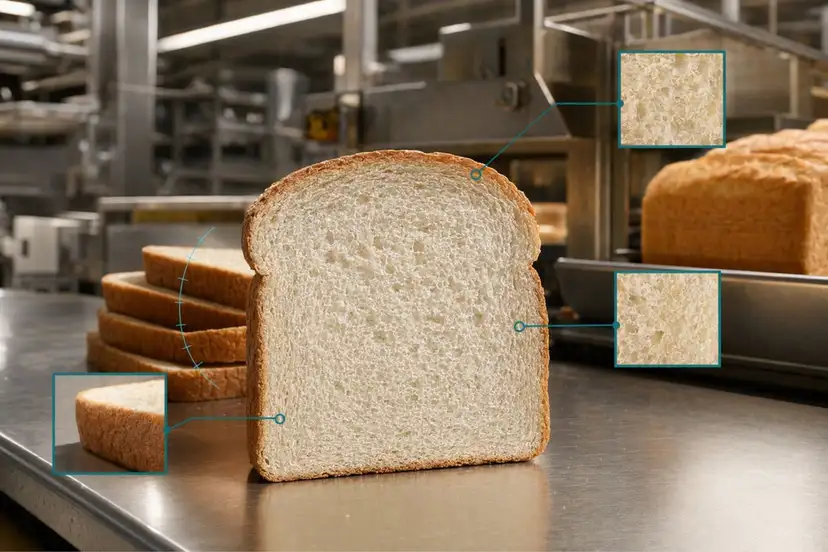
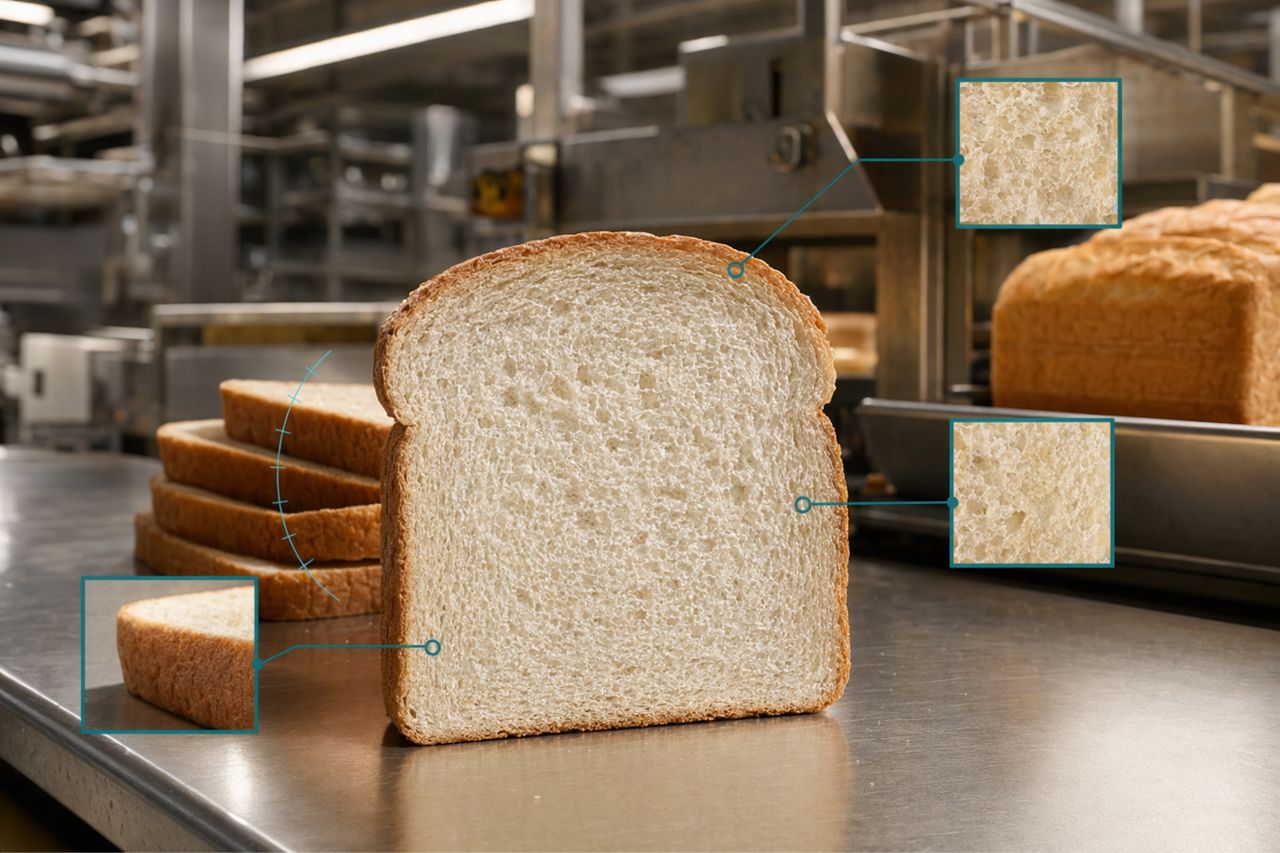
Slicing is one of the clearest places where crumb structure becomes a cost issue. A loaf can leave the oven looking acceptable and still fail at the slicer.
Poor sliceability can show up as:
- Tearing at the blade entry point.
- Compression and slow recovery after slicing.
- Crumb balling or smearing on blades.
- Irregular slice thickness caused by loaf instability.
- End-slice breakage and higher giveaway.
- Packs rejected for appearance before dispatch.
Enzyme systems can support crumb strength, resilience, and handling quality so loaves move through high-speed slicing and bagging with less disruption. This is especially valuable when a line is running multiple SKUs, variable flour lots, or tight cooling windows.
For technical managers, the key question is not simply “is the bread softer?” It is “does the loaf cut cleanly, recover well, pack consistently, and survive the route?”
Dough tolerance protects the whole chain
Retail distribution does not reward fragile processes. A bread factory needs dough that behaves through real production conditions: mixer loading variation, minor delays, fermentation temperature movement, divider stress, moulder pressure, panning, proofing, and oven transfer.
Improved dough tolerance can help maintain:
- More consistent handling across shifts.
- Better gas retention during fermentation and proofing.
- More predictable oven spring.
- Reduced line stoppage sensitivity.
- Lower risk of under-volume or misshapen loaves.
- Smoother changeovers between flour deliveries.
When dough is more forgiving, bakeries have fewer outlier batches. Fewer outliers mean fewer products that enter distribution already carrying a quality risk.
The link between enzyme performance and forecasting
Forecasting teams work with probability. If a loaf has a narrow softness window and variable quality, planners may reduce orders, shorten distribution reach, or build in extra safety stock. All three choices carry cost.
More stable bread quality can make forecasting less defensive.
For retail programs, this can support:
- Better confidence in planned dispatch volume.
- Lower emergency replenishment pressure.
- Reduced depot-level uncertainty.
- Fewer claims linked to premature firming or poor presentation.
- More consistent execution of promotions.
Enzyme solutions do not replace demand planning. They strengthen the product quality foundation that planning depends on.
A practical waste-reduction review for bread factories
Before changing a formulation, CrumbForge recommends mapping the waste chain from dough make-up to returned product. The objective is to identify where quality loss becomes measurable cost.
1. Track waste by failure mode
Separate returns and rejects into practical categories:
- Firm before end of shelf life.
- Poor slice appearance.
- Low volume or inconsistent shape.
- Pack deformation.
- Crumb weakness or tearing.
- Dispatch damage.
- Retail rejection or markdown.
This helps avoid treating all waste as a forecasting problem when some of it is a formulation or process stability problem.
2. Compare shift-to-shift performance
Waste patterns often follow shifts, flour lots, proofing conditions, or cooling windows. Look for repeatable differences in dough handling, loaf height, crumb texture, and slicing loss.
3. Stress-test the real route
A loaf that passes at the bakery may still struggle after stacking, transport, depot holding, and retail handling. Evaluate softness, slice recovery, and pack condition after the journey your product actually takes.
4. Match enzyme function to the production issue
Different bread lines need different support. A pan bread line facing early firming may need a different enzyme approach than a bun line struggling with dough strength or a sandwich bread line losing yield at the slicer.
CrumbForge helps bakeries focus on the operational target first, then build the enzyme solution around the process.
What better retail distribution performance can look like
For a commercial bakery, success should be measured in production and customer outcomes, such as:
- Softer crumb through the intended sales window.
- Cleaner slicing and fewer rejected packs.
- More consistent loaf volume and shape.
- Reduced return rates from retail customers.
- Less finished-product waste before dispatch.
- Improved line resilience during flour and schedule variation.
- Greater confidence in longer routes or larger retail programs.
The best enzyme program is not the one that sounds complex. It is the one that makes the bread line more predictable and the product more dependable.
Building a waste-reduction enzyme program with CrumbForge
CrumbForge works with bread factories that need consistent bakery performance under commercial pressure. We focus on the line conditions technical teams deal with every day: high-speed mixing, proofing variation, oven balance, slicing throughput, cooling limitations, and retail specification demands.
If your team is trying to reduce bread waste in retail distribution, the right starting point is a practical review of your product, process, and quality targets.
Ready to discuss softness retention, sliceability, returns, and distribution performance?
Request a quote through the on-site form and tell us about your bread type, line format, target shelf life, and current waste points.