Texture Analyzer vs Plant Reality: Measuring Bread Softness Without Ignoring Consumer Experience
Bread softness is easy to discuss in a lab and harder to protect on a fast line.
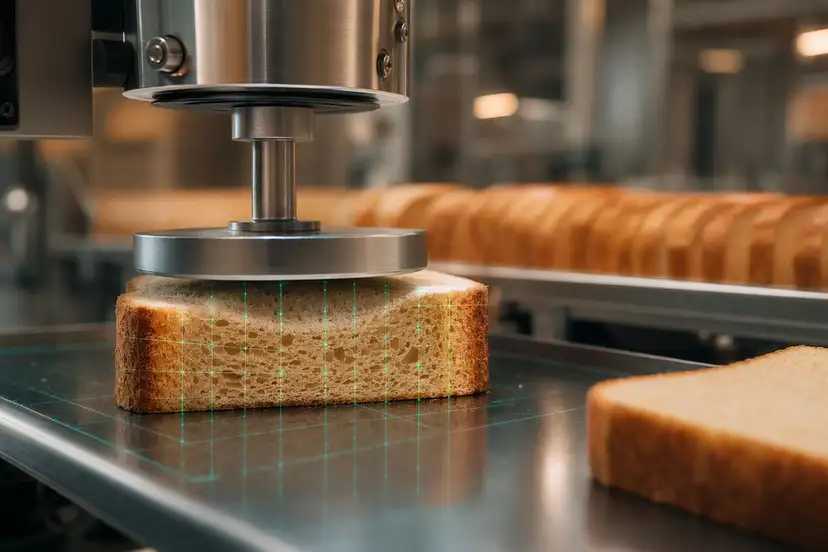
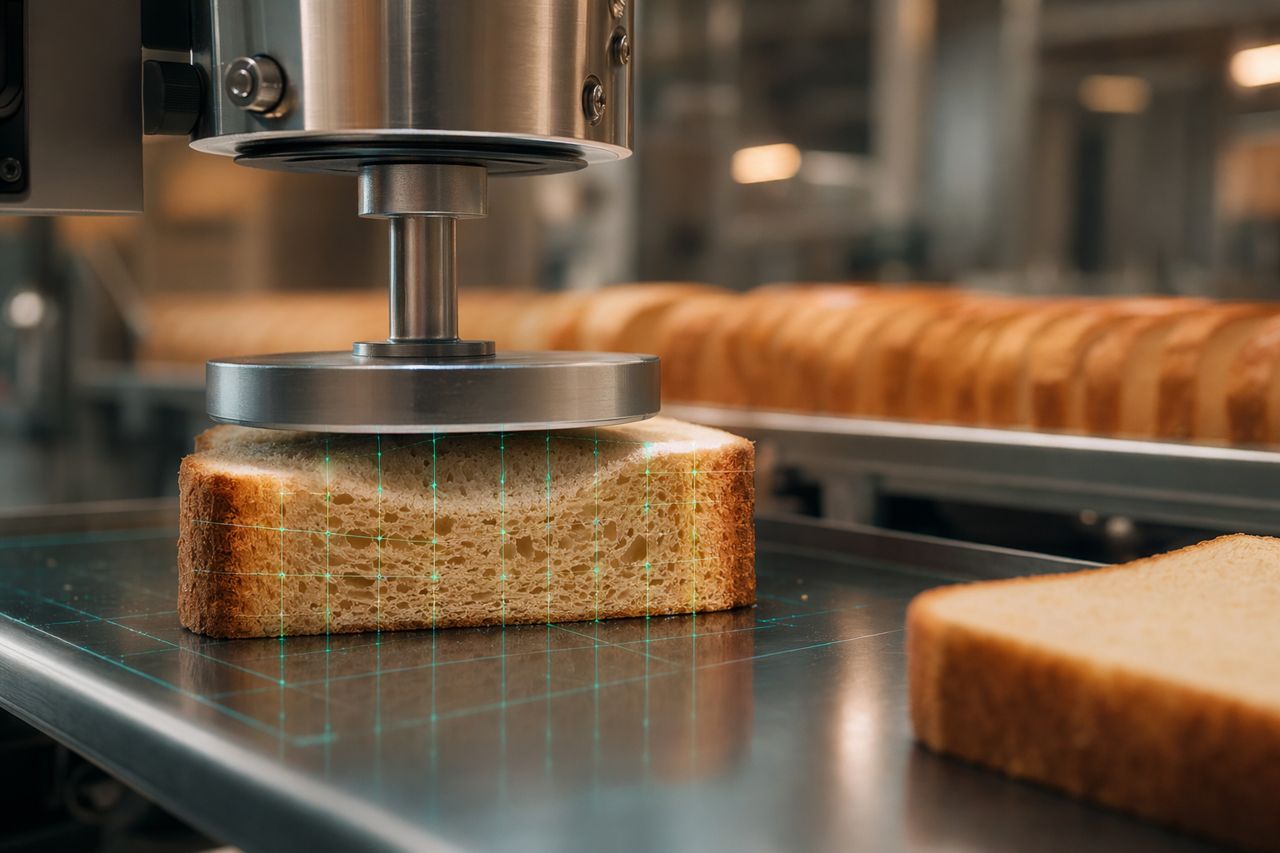
A texture analyzer can help you track crumb firmness, compare formulas, and flag staling trends. But a compression result is not the whole loaf story. Bakery technical managers also have to deal with flour movement, mixer loading, dough temperature drift, proof variation, oven balance, cooling time, bag pressure, slicing stress, and the way a shopper judges softness by hand and bite.
CrumbForge is a bakery enzyme supplier for bread factories that need dependable performance across shifts, flours, and high-speed lines. Our view is simple: measure softness, then prove it in plant reality.
1-minute explainer: why bread softness needs both lab measurement and line-floor validation.
The texture analyzer is useful, but it does not eat the bread
Texture analyzer data gives structure to softness work. It helps teams compare production dates, review anti-staling strategies, and make formula changes less subjective.
Used well, it can support decisions around:
- Crumb firmness over shelf life
- Batch-to-batch consistency
- Formula comparison during trials
- The effect of process changes on finished softness
- Staling trend control across storage time
The limitation is not the instrument. The limitation is treating the number as the consumer experience.
A loaf can look acceptable in lab data and still feel dry in the mouth. It can test soft but collapse under slicing. It can leave the oven with strong volume, then lose resilience after cooling and bagging. Plant reality decides whether the softness is saleable.
What plant reality adds to the softness picture
Bread factories do not run in perfect laboratory conditions. They run across shifts, flour deliveries, ambient changes, production targets, sanitation windows, and high-speed mechanical handling.
Softness performance is shaped by the full process:
Flour variation
Protein quality, starch condition, water absorption, and damaged starch can shift from lot to lot. A softness strategy that works on one flour may need more tolerance when the next delivery behaves differently.
Mixing and dough development
Overdevelopment can tighten the bite. Underdevelopment can reduce gas retention and weaken structure. Both affect how the crumb forms and how it feels after slicing and storage.
Fermentation stability
Dough that is sensitive in proof can create uneven cell structure. That often shows up later as inconsistent crumb softness, variable oven spring, or weak slicing performance.
Oven spring and bake balance
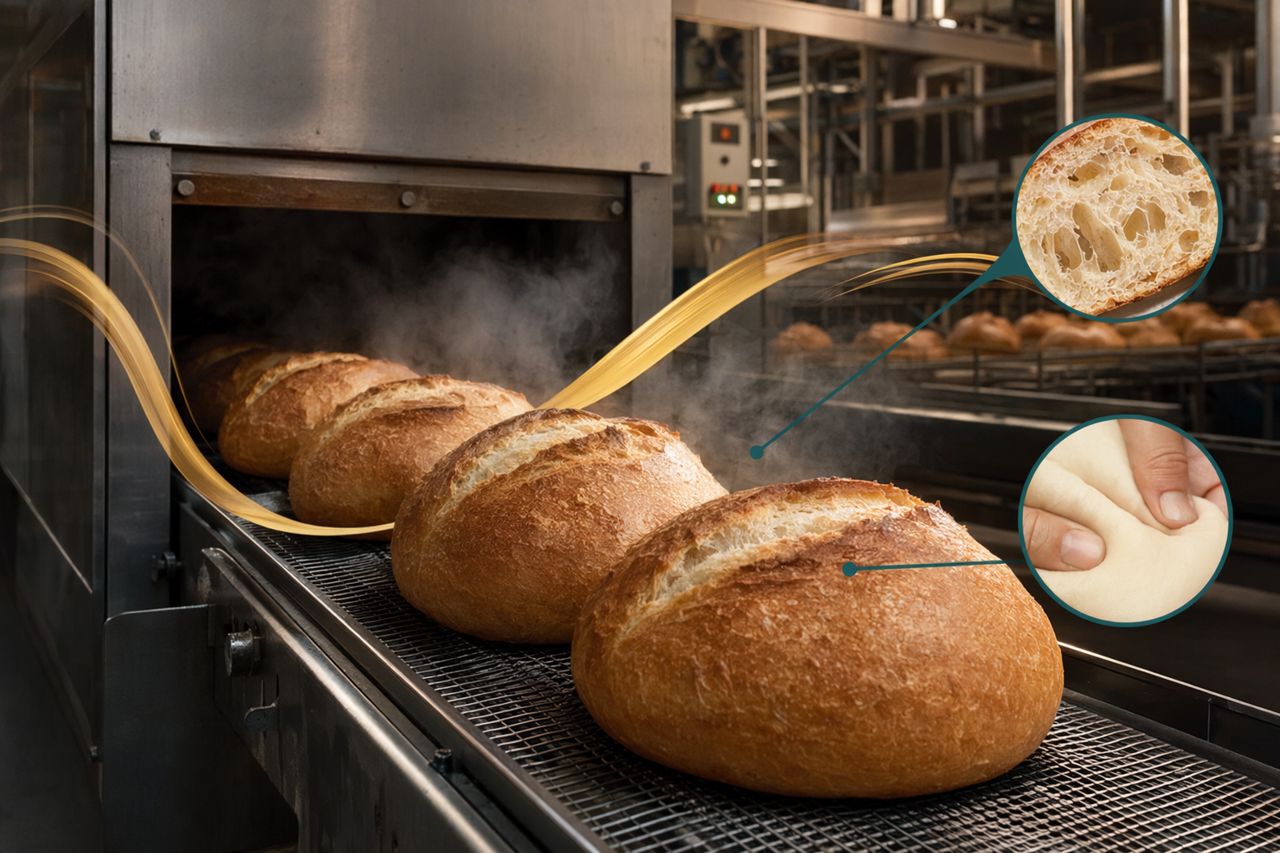
Volume lift matters, but so does the final crumb network. A loaf with poor internal structure may feel harsh or dry even when the external shape looks acceptable.
Cooling, slicing, and bagging
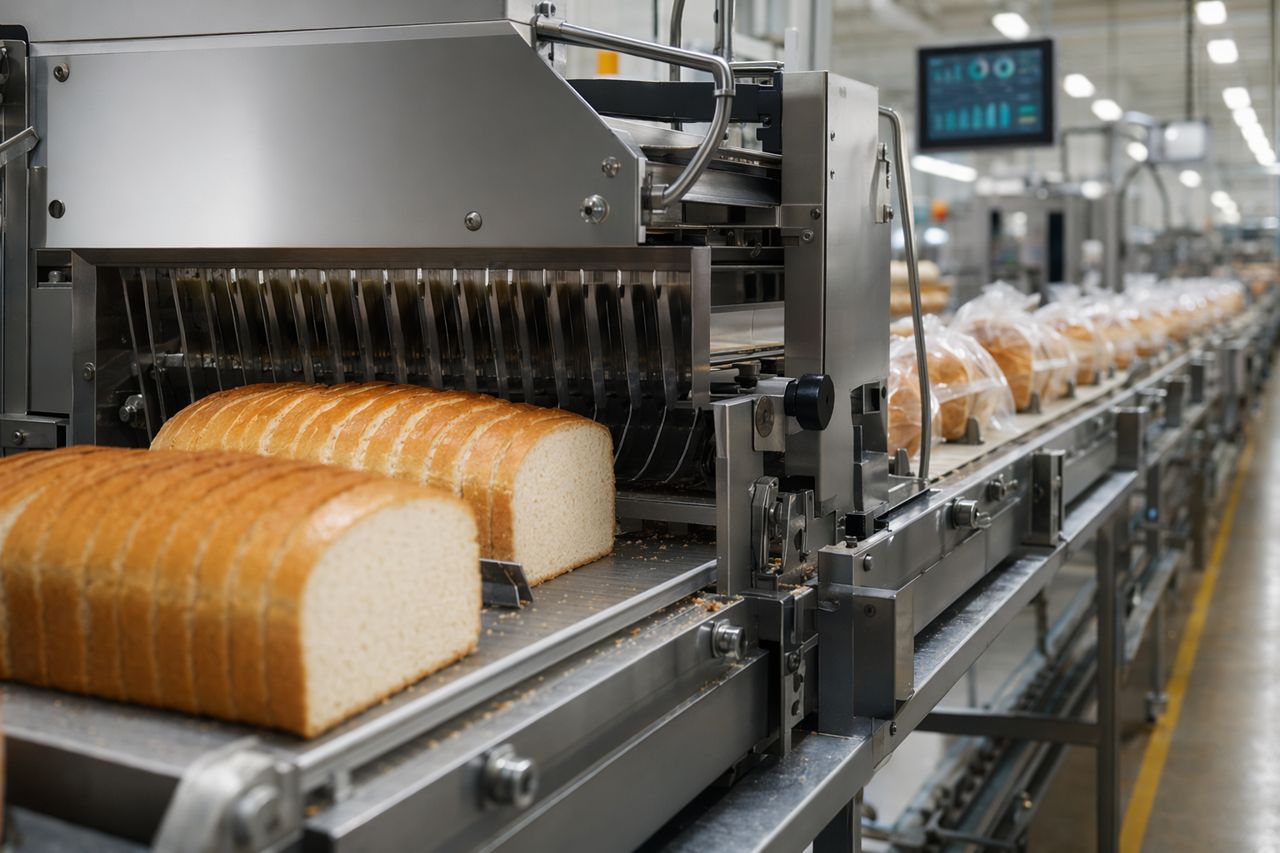
A bread softness program is not finished at the oven exit. Cooling time, blade condition, slice speed, and packaging compression can all change the way softness is perceived.
The consumer judges softness as a system
Consumers do not separate crumb firmness, resilience, moisture perception, and slice flexibility. They judge the whole eating and handling experience.
That means your technical target should include more than one data point:
- Does the slice bend without cracking?
- Does the crumb recover after light pressure?
- Does the bite stay moist rather than pasty or dry?
- Does the loaf hold softness through the declared shelf life?
- Does it slice cleanly without tearing, smearing, or edge damage?
- Does softness remain consistent across production shifts?
When these questions are paired with texture analyzer trends, the data becomes far more useful.
Where enzymes fit in softness control
Enzyme systems can support softness, volume, dough handling, and anti-staling performance, but they must be selected for the line, not just the label claim.
In bread production, the practical goals are usually clear:
- Improve dough tolerance during mixing, makeup, and proof
- Support oven spring without over-relaxing the dough
- Build a finer, more resilient crumb structure
- Slow firming during shelf life
- Reduce slicing waste caused by weak or tearing crumb
- Keep softness dependable when flour lots change
The balance matters. Too much softness without structure can create handling problems. Too much strength without eating quality can make the crumb tight or dry. A good enzyme approach supports the process window as well as the consumer bite.
A better trial plan: lab data plus line evidence
For bread factories, the strongest evaluation model combines measurement with production observation.
Use this practical sequence:
- Define the commercial problem: early firming, dry bite, slicing waste, tight crumb, weak volume, or inconsistent softness.
- Set the current plant baseline using your normal flour, formula, line speed, and shelf-life expectations.
- Run the enzyme trial under real production conditions, not only in a small test bake.
- Track softness trends, but also record mixer feel, dough handling, proof stability, oven spring, depanning, cooling behavior, and slicing performance.
- Review the finished loaf at the point of saleable experience: in the bag, after handling, and through the expected shelf life.
The aim is not to chase the softest possible reading. The aim is dependable bread that runs cleanly, slices well, reduces waste, and delivers the softness consumers expect.
Signs your softness program is too lab-led
Your current evaluation may be missing plant reality if you see these patterns:
- The trial looks good in test bakes but fails during full production
- Operators report sticky, weak, or unpredictable dough
- Loaves feel soft but slice poorly
- Texture data improves, yet complaints about dry bite continue
- Softness is strong on day one but drops too quickly later
- One shift gets acceptable results while another struggles
- Flour changes create sudden performance swings
These are not just quality issues. They are production cost issues. Poor softness control can increase rework, downgrade product, raise returns, and reduce brand confidence.
What CrumbForge brings to the discussion
CrumbForge works with bread factories that need enzyme solutions built around real production outcomes.
We focus on:
- Dough tolerance across variable operating conditions
- Fermentation stability and predictable gas retention
- Oven spring and loaf volume support
- Crumb softness and resilience
- Anti-staling performance through shelf life
- Slicing performance and waste reduction
- Practical trials that technical teams can run and evaluate
We do not treat bread softness as a single lab number. We treat it as a line-floor result that has to survive mixing, proofing, baking, cooling, slicing, bagging, distribution, and consumer handling.
The practical takeaway
A texture analyzer can tell you whether your crumb is trending firmer or softer. It cannot tell you the full story of how that bread behaves on a high-speed line or how it feels to the consumer.
For better decisions, connect the lab result to the production result:
- Measure softness
- Observe dough behavior
- Validate slicing performance
- Check shelf-life feel
- Compare consumer-relevant eating quality
- Keep the process stable across shifts and flour lots
That is where enzyme selection becomes more valuable: not as a shortcut, but as a controlled tool for dependable softness.
Request a quote
If your bread line is fighting early firming, slicing damage, dry bite, or inconsistent softness across shifts, CrumbForge can help you plan a focused enzyme trial.
Use the on-site request a quote form and tell us your bread type, current softness challenge, production format, and target shelf life. We will help map the right starting point for your process.