The Bakery Technical Manager’s Checklist for Trialing a New Bread Improver
A bread improver trial should answer one question clearly: will this system make production more dependable under real factory conditions?
For a commercial bakery, a good trial is not just a neat test bake or a single high-volume loaf. It is a controlled check against the pressures of daily production: flour variation, line speed, fermentation timing, divider stress, oven profile, cooling time, slicing performance, packing, and shelf-life expectations.
CrumbForge is a bakery enzyme supplier for bread factories that need dependable performance across shifts, flours, and high-speed lines. Use this checklist to structure your next improver comparison and give your technical, production, and procurement teams a shared basis for decision-making.
1. Define the production problem before testing
Start with the operational reason for the trial. A bread improver should be judged against a clear production target, not a vague promise of better quality.
Common objectives include:
- Improving dough tolerance during normal plant delays
- Stabilizing fermentation across shifts
- Supporting oven spring and loaf volume
- Extending crumb softness through packed shelf life
- Improving slicing performance and reducing crumb waste
- Managing variable flour quality without constant operator adjustment
- Reducing rework, downgrades, or customer complaints
Checklist
- What is the current quality or waste issue?
- Which product formats are affected: pan bread, buns, rolls, toast bread, sandwich loaves, or specialty lines?
- Is the issue seasonal, flour-related, shift-related, or constant?
- Which departments need to sign off: technical, production, QA, procurement, sales, or customer quality?
- What does success look like in line-floor terms?
2. Lock down the control bake
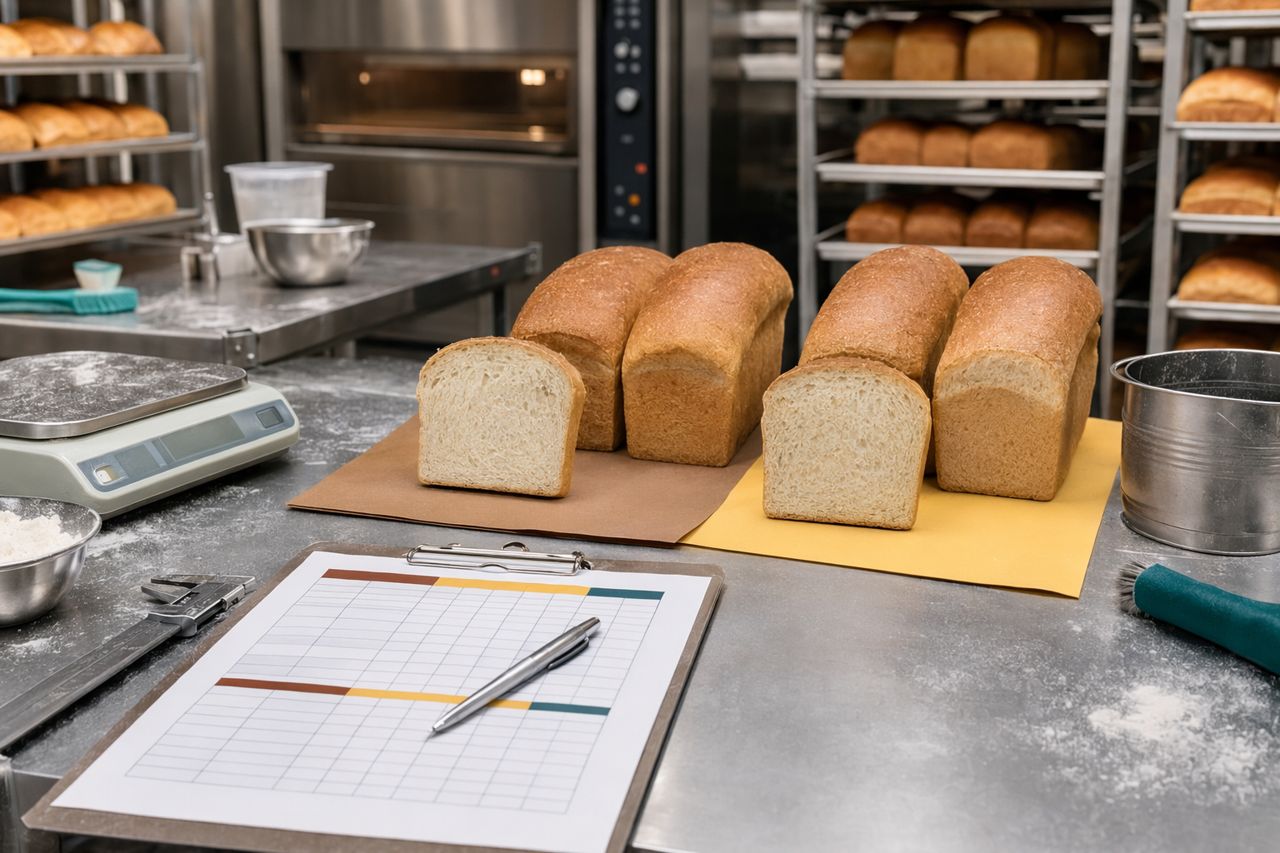
A useful trial needs a reliable control. Run your current formula and current improver under the same practical conditions you will use for the candidate system.
Capture the baseline before making changes. If the baseline moves during the trial, the result becomes difficult to interpret.
Record the control data
- Flour batch and specification available to the site
- Water addition and dough temperature target
- Mixing time and dough development observations
- Dough feel at make-up
- Proof time and proof stability
- Oven settings and bake profile
- Finished loaf weight, height, and volume checks used by your site
- Crumb softness observations over the expected shelf-life window
- Slice quality, crumb loss, and blade performance notes
- Pack appearance and customer-facing defects
3. Keep the trial formula disciplined
When testing a new bread improver, avoid changing too many variables at once. If flour, yeast level, water, mixing, proofing, and improver all shift together, you will not know which factor delivered the result.
A disciplined approach is usually best:
- Run the control formula.
- Replace the improver according to the agreed bakery trial plan.
- Keep processing conditions stable where possible.
- Adjust only when the dough clearly requires it.
- Record every adjustment and the reason for it.
The goal is not to force the candidate improver into a perfect one-off bake. The goal is to understand whether it gives the bakery a wider, more forgiving operating window.
4. Watch the dough before judging the bread
Finished bread quality starts with dough handling. A trial improver must prove itself before the oven.
Technical managers should observe how the dough behaves through the process, not only at the end of the line.
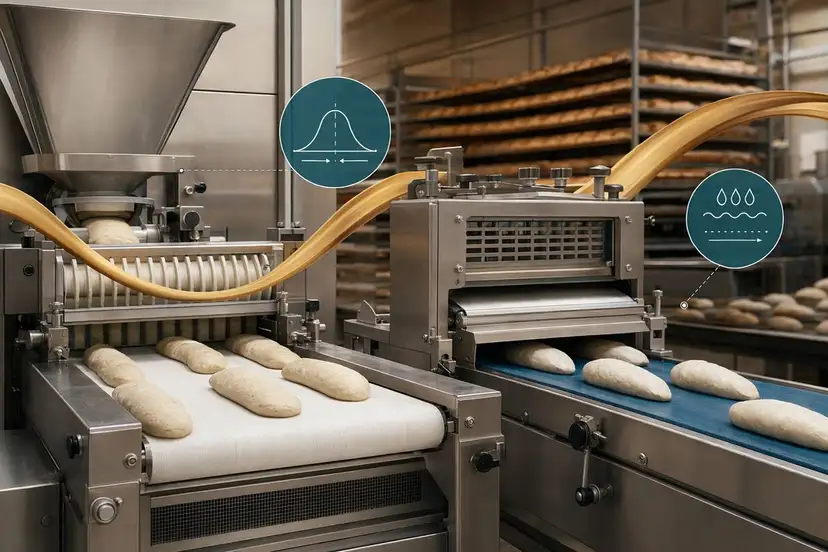
Dough-handling checkpoints
- Does the dough clear the mixer consistently?
- Is the dough too tight, too slack, sticky, or short?
- Does it tolerate normal floor time without weakening?
- Does it divide cleanly at production speed?
- Is weight control stable through the divider?
- Does the dough round and mould without tearing?
- Is pan deposit clean and repeatable?
- Does the dough show stable gas retention in proof?
- Are operators compensating with flour dusting, speed changes, or manual correction?
If the improver improves finished bread but makes the line harder to run, the commercial value may be limited.
5. Stress-test fermentation stability
Fermentation is where many improver trials look good in controlled conditions but fail under factory pressure.
A robust improver should support consistency when production is not ideal. That includes small delays, temperature movement, flour variation, and the normal rhythm of shift changeovers.
Fermentation questions to ask
- Does proof height develop predictably?
- Is the dough sensitive to short delays?
- Does it over-proof quickly when the line slows?
- Does oven spring remain stable across the run?
- Are collapsed shoulders, blisters, dense zones, or weak sidewalls reduced?
- Does the line team report more confidence or more intervention?
The strongest trial evidence often comes from the difficult part of the shift, not the first perfect batch.
6. Measure the finished bread like a customer would experience it
Volume matters, but it is not the only buying criterion. Commercial bread needs to look right, slice cleanly, pack well, and eat consistently through its declared shelf life.
Finished product checkpoints
- Loaf symmetry and crown shape
- Oven spring and sidewall strength
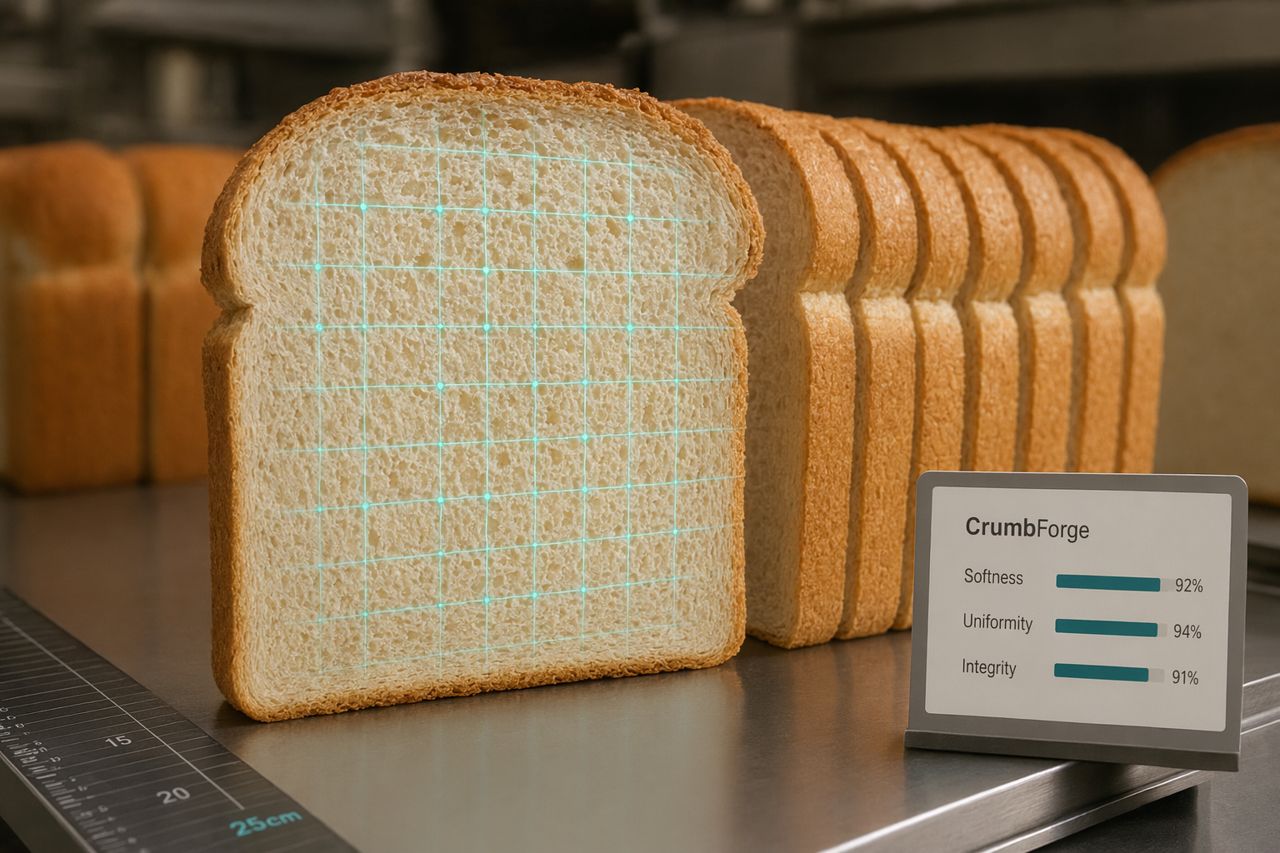
- Crumb structure and cell uniformity
- Softness at packing and through shelf life
- Resilience after compression in pack
- Slice integrity at standard slicer settings
- Crumb loss and blade build-up
- Crust color and surface finish
- Pack presentation after cooling and handling
- Customer complaint risks, such as holes, gummy zones, dryness, or crumbling
For buns and rolls, add hinge strength, top smoothness, height consistency, and resilience after packing.
7. Include the slicer and packing line in the decision
A bread improver that performs well up to the cooler can still create problems at slicing. For high-speed bakeries, slicer behavior is a commercial performance issue, not a minor detail.
Slicing and packing observations
- Does the loaf enter the slicer cleanly?
- Are slices uniform and intact?
- Is crumb tearing reduced?
- Is crumb accumulation around blades acceptable?
- Does the product bag without distortion?
- Does the loaf recover shape after packing?
- Are rejects, rework, or giveaway affected?
Bring slicer operators and packing supervisors into the trial review. Their feedback often identifies problems before they become customer complaints.
8. Trial across more than one shift
Single-shift trials can hide risk. A bread factory needs performance that holds across operators, line temperatures, flour deliveries, and production pressures.
Where practical, compare the candidate improver across:
- Day and night shifts
- Different flour batches
- Normal and stretched production windows
- Start-up, steady-state, and end-of-run conditions
- One or more relevant product formats
This is especially important when the business case depends on waste reduction, softer crumb over time, or improved tolerance on high-speed lines.
9. Build a simple trial scorecard
A scorecard keeps the decision practical. Use your own site standards, but make sure the scoring covers process performance, finished bread quality, and commercial impact.
Suggested scoring areas
| Area |
What to review |
| Dough tolerance |
Handling, delay tolerance, stickiness, machinability |
| Fermentation stability |
Proof control, gas retention, resilience to line variation |
| Oven performance |
Oven spring, loaf shape, sidewall strength, bake consistency |
| Crumb quality |
Softness, cell structure, resilience, eating quality |
| Slicing performance |
Slice integrity, crumb loss, blade cleanliness |
| Waste reduction |
Rejects, rework, downgrades, customer complaint risk |
| Operator acceptance |
Whether the line runs easier or needs more correction |
| Procurement fit |
Supply reliability, specification fit, and value against current system |
10. Check the full cost of change
The lowest ingredient cost is not always the lowest production cost. A new improver should be evaluated against total value on the line.
Consider whether the candidate system can help reduce:
- Out-of-spec bread
- Excessive flour dusting
- Product giveaway
- Rework and downgrades
- Customer complaints
- Line stoppages linked to poor handling
- Shelf-life related returns
- Technical firefighting during flour changes
A strong improver trial gives procurement a better basis for negotiation because the decision is tied to factory performance, not only ingredient price.
11. Ask the right questions of your supplier
Before committing to a new system, make sure the supplier understands bread factory conditions, not just ingredient labels.
Supplier questions
- Which bread formats is this improver designed to support?
- How should it perform under flour variation?
- What processing changes, if any, should the bakery expect?
- What signs indicate the system is being over- or under-applied?
- How should the bakery evaluate softness, volume, and slicing during trial?
- What technical support is available during plant validation?
- Can the supplier help interpret line observations and refine the next trial step?
CrumbForge works with commercial bakeries that need practical enzyme systems matched to process realities: dough tolerance, fermentation stability, oven spring, crumb softness, anti-staling performance, slicing behavior, and waste reduction.
12. Decide with evidence, not the best single bake
The best trial result is repeatable. Look for the candidate improver that performs well across realistic conditions and makes the process easier to control.
A good decision file should include:
- Control and trial bake records
- Processing observations from each line stage
- Finished bread checks over the shelf-life window
- Operator and supervisor comments
- Waste, rework, and slicing notes
- Photos of crumb, loaf shape, and defects
- Procurement and supply considerations
- Recommended next action
Bread improver trial checklist summary
Use this quick list before your next plant trial:
- Define the technical and commercial objective
- Establish a stable control bake
- Keep formula and process changes disciplined
- Observe dough handling through the full line
- Stress-test proofing and fermentation stability
- Check oven spring, loaf shape, and crumb structure
- Evaluate softness through the intended shelf-life window
- Include slicing and packing performance
- Trial across shifts and flour variation where possible
- Score process, quality, waste, and operator acceptance
- Review total production value, not ingredient price alone
- Confirm supplier support for plant validation
Request a quote for your bread improver trial
If you are comparing enzyme-based improver options for a commercial bread line, CrumbForge can help you frame the trial around real production outcomes.
Use the on-site request a quote form and share your bread format, line type, current challenge, and target improvement. We will respond with a practical starting point for your bakery team.
Request a quote